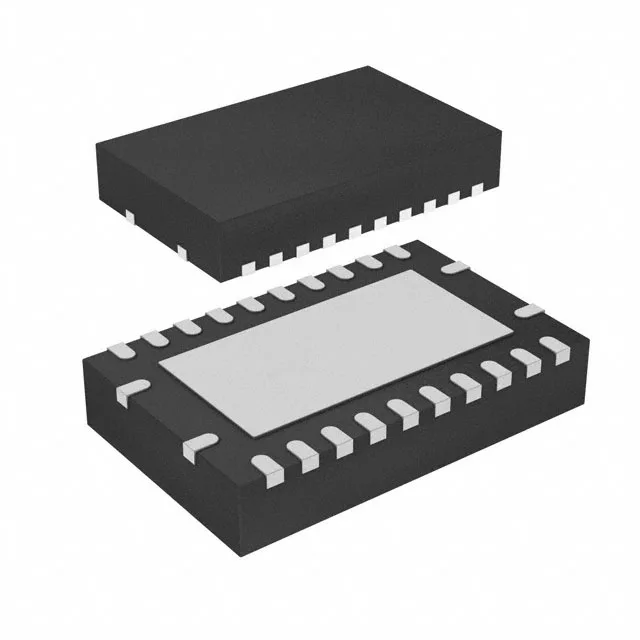
Switching frequency from 100 kHz to 2.2 MHz lets you trade inductor size for switching loss. At 2.2 MHz you shrink the magnetics but pay more in FET gate-drive loss; at 100 kHz you get better efficiency but need a larger inductor. The clock sync input lets you lock the switcher to a system clock or another converter, keeping the noise spectrum deterministic — helpful when the switcher feeds a sensitive analog rail. That qualifies it for engine-bay electronics, outdoor base stations, and factory-floor controllers. Control features include current limit, Power Good, soft start, and ramp control. Power Good gives a clean reset signal to a downstream FPGA or MCU; soft start limits inrush on the output cap. The ramp control pin lets you adjust the internal slope compensation — useful when the output capacitor ESR is very low (ceramic-only output).
This part is a current-production, standard-shelf item from Texas Instruments.