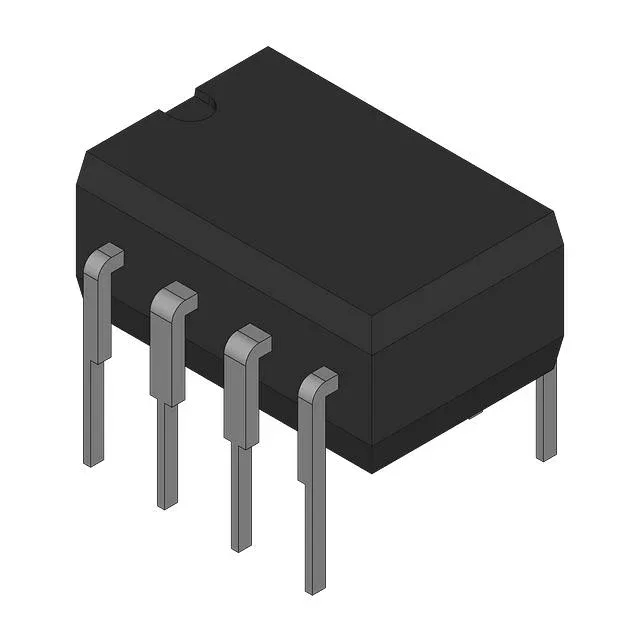
Sample-and-hold in a through-hole DIP — what the LF398P brings to the analog chain
The Texas Instruments LF398P is a monolithic sample-and-hold circuit in an 8-pin DIP package (8-DIP, 0.300" body, 7.62 mm pitch, through-hole mounting). It holds one sample of an analog input voltage on an external hold capacitor, with a typical acquisition time determined by that capacitor value. Input bias current is 10 nA, and input offset voltage is 2 mV.
The 10 V minimum supply means the LF398P needs at least ±5 V dual rails or a single 10 V rail to function. The 36 V maximum covers ±18 V supplies, common in ±15 V analog systems. The 4.5 mA supply current is the quiescent draw — the hold capacitor charging current adds to the total from the input signal source, not the supply pin. In a ±15 V system the part dissipates about 135 mW quiescent, well within the DIP package's thermal capability at 70°C ambient.
It will not meet the -40°C cold start or 85°C+ soak required for automotive under-hood, outdoor telecom cabinets, or factory floor zones near ovens. For those environments, an industrial or military-temperature sample-and-hold (e.g., the LF398H in a hermetic package, or a modern CMOS S/H with extended range) would be needed.
Active production, but RoHS non-compliant — a sourcing flag
For new designs with a RoHS mandate, a Pb-free equivalent (e.g., the LF398N/NOPB in a PDIP package) should be specified. For legacy BOMs or exempt applications (military, medical, high-rel), the LF398P remains a valid, in-production choice.