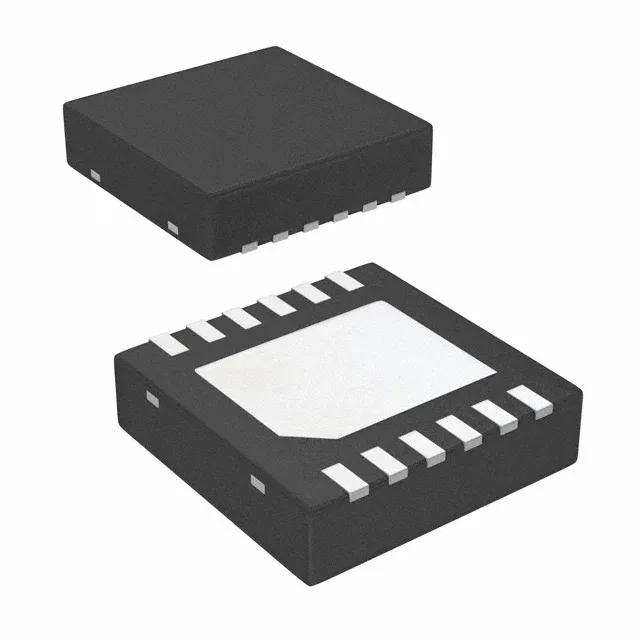
Texas Instruments LDC1612DNTT — Discrete Semiconductors

LDC1612DNTT Inductance-to-Digital Converter, 28-bit, I²C

MPNLDC1612DNTT
End of Life

Texas Instruments LDC1612DNTT inductance-to-digital converter, 28-bit resolution, 2 channels, I²C interface, 1k sampling rate, 2.7V–3.6V supply, -40°C to 125°C, 12-WSON (4x4) package.

$4.63Ref. price · indicative, final on quote
Packaging12-WFDFN Exposed Pad
RoHSROHS3 Compliant
Independent supplier — new & surplus stockAuthenticity-screened · ESD-safe packingListing updated Aug 2026

Specifications

LDC1612DNTT specifications
ParameterValue
TypeInductance-to-Digital Converter
MountingSurface Mount
Supply voltage2.7V ~ 3.6V
Voltage supply sourceSingle Supply
Data interfaceI²C
Operating temperature-40°C ~ 125°C
PackageTape & Reel (TR); Cut Tape (CT)
Case12-WFDFN Exposed Pad
Resolution28 b
Channels2
Sampling rate (Per second)1k

Product details

It is designed for contactless sensing of conductive targets — think position, displacement, or proximity detection in environments where a physical switch or magnetic sensor would wear or drift. The 28-bit resolution gives fine measurement granularity, and the 1k samples-per-second rate is adequate for slow-moving mechanical systems like valve position feedback or linear actuator travel limits. The 12-WSON (4x4) package is a small footprint for space-constrained PCBs.

ROHS3 compliant.

Frequently asked questions

What is the difference between LDC1612 and LDC1612DNTT?

The LDC1612DNTT is the specific orderable device code for the 12-WSON (4x4) package variant of the LDC1612 family. The base LDC1612 part number may refer to other package options; the DNTT suffix identifies this exact tape-and-reel, surface-mount version.

How do I use LDC1612DNTT for inductive sensing?

Connect an LC resonator (sensor coil and capacitor) to each of the two channels. The LDC1612DNTT measures the resonant frequency shift caused by a conductive target approaching the coil, converting it to a 28-bit digital value read over I²C. The 1k sampling rate is suited for static or slow-moving targets.