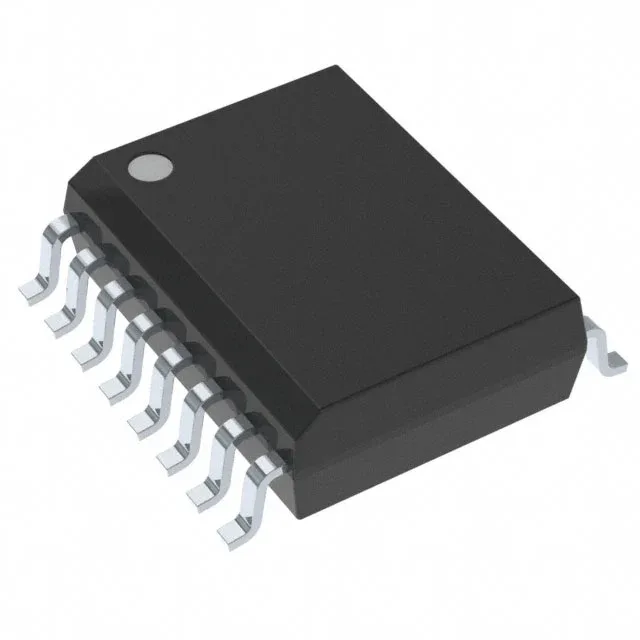
Texas Instruments ISO7821FDWR — Digital Isolators

ISO7821FDWR Digital Isolator, 5700Vrms, 100Mbps, 16-SOIC

MPNISO7821FDWR
End of Life

Texas Instruments ISO7821FDWR, General Purpose digital isolator, Capacitive Coupling, 2 channels, 100Mbps data rate, 5700Vrms isolation, 2.25V to 5.5V supply, -55°C to 125°C, 16-SOIC package.

$6.4Ref. price · indicative, final on quote
Packaging16-SOIC (0.295", 7.50mm Width)
StockContact for availability
MOQ1 pcs
  • 100% new & originalTraceable channels only — no refurbs, no pulls, no remarked parts.
  • Date & lot codes on quoteStated per line before you commit; label photos on request.
  • MSL-compliant ESD packingMoisture-sealed bags with indicator cards; reels photo-verified.
  • PayPal buyer protectionPay by T/T, PayPal or Payoneer — card payments covered end to end.

Specifications

ISO7821FDWR Technical Specifications
ParameterValue
TypeGeneral Purpose
Channel typeUnidirectional
Mounting typeSurface Mount
Voltage2.25V ~ 5.5V
Voltage - isolation5700Vrms
Isolated powerNo
Operating temperature-55°C ~ 125°C
Pulse width distortion4.6ns
PackageTape & Reel (TR); Cut Tape (CT)
Data rate100Mbps
TechnologyCapacitive Coupling
Case16-SOIC (0.295\", 7.50mm Width)
Number of channels2
Inputs - side 1/Side 21/1
Rise (Fall time)2.4ns, 2.4ns
Propagation delay tpLH (tpHL)16ns, 16ns
Common mode transient immunity100kV/µs

Product details

5700Vrms isolation in a 16-SOIC — what that buys you

The Texas Instruments ISO7821FDWR is a two-channel, unidirectional digital isolator using capacitive coupling to deliver 5700Vrms of galvanic isolation in a 16-SOIC package. It supports a data rate up to 100Mbps, with propagation delays of 16ns max and pulse-width distortion held to 4.6ns. The supply range spans 2.25V to 5.5V, so it can bridge 3.3V and 5V logic domains without a separate level shifter.

Common-mode transient immunity — the spec that keeps data clean in noisy environments

With a minimum common-mode transient immunity (CMTI) of 100kV/µs, the ISO7821FDWR can reject fast voltage transients that couple across the isolation barrier. In a motor-drive or solar-inverter design, where switching edges on the high-voltage side can slam the isolation barrier with several thousand volts per microsecond, this rating means the output stays in the correct logic state rather than glitching. The 2.4ns typical rise/fall time also keeps the signal edges sharp enough for 100Mbps throughput without excessive ringing.

The wide supply range and temperature grade also mean it fits across multiple BOM variants without requalification.

Frequently asked questions

Is ISO7821FDWR suitable for 3.3V or 5V operation?

The unidirectional channel configuration (one input on side 1, one on side 2) lets it bridge different voltage domains without additional translation.

What is the difference between ISO7821 and ISO7821F?

The 'F' suffix in ISO7821FDWR indicates a fail-safe output state: when the input-side supply is off or the input signal is missing, the output defaults to a known logic-high level. The non-F variant (ISO7821) does not have this fail-safe behavior. Both share the same 5700Vrms isolation, 100Mbps data rate, and package.