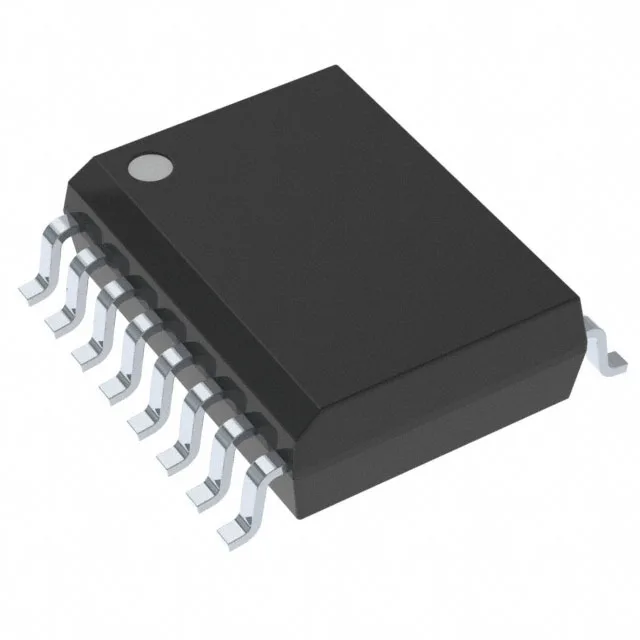
Texas Instruments ISO7762QDWQ1 — Digital Isolators

TI ISO7762QDWQ1 digital isolator, 6-ch, 100 Mbps, 5000 Vrms

MPNISO7762QDWQ1
Active

Texas Instruments ISO7762QDWQ1, Automotive AEC-Q100, 6-channel digital isolator, Capacitive Coupling, 100Mbps, 5000Vrms, 2.25V~5.5V supply, 16-SOIC, -40°C~125°C.

$6.0300Ref. price · indicative, final on quote
StockContact for availability
MOQ1 pcs
  • 100% new & originalTraceable channels only — no refurbs, no pulls, no remarked parts.
  • Date & lot codes on quoteStated per line before you commit; label photos on request.
  • MSL-compliant ESD packingMoisture-sealed bags with indicator cards; reels photo-verified.
  • PayPal buyer protectionPay by T/T, PayPal or Payoneer — card payments covered end to end.

Specifications

ISO7762QDWQ1 Technical Specifications
ParameterValue
TypeGeneral Purpose
SeriesAutomotive, AEC-Q100
Channel typeUnidirectional
Mounting typeSurface Mount
Voltage2.25V ~ 5.5V
Voltage - isolation5000Vrms
Isolated powerNo
Operating temperature-40°C~125°C
Pulse width distortion4.9ns
PackageTube
Data rate100Mbps
TechnologyCapacitive Coupling
Case16-SOIC (0.295\", 7.50mm Width)
Number of channels6
Inputs - side 1/Side 24/2
Rise (Fall time)1.1ns, 1.4ns
Propagation delay tpLH (tpHL)16ns, 16ns
Common mode transient immunity85kV/µs

Product details

The 5000 Vrms isolation rating is the reinforced-level barrier that meets IEC 60747-5-5 and VDE 0884-10 requirements for basic and reinforced isolation in mains-connected equipment. For a traction inverter or on-board charger, this rating provides the creepage and clearance margin needed for a 600 V DC bus with transient overvoltages. The 85 kV/µs minimum common-mode transient immunity is the critical spec for surviving fast switching events: when a SiC or GaN FET switches at 50 V/ns, the isolator's internal coupling capacitance must reject that common-mode slew without corrupting the data. A CMTI below 50 kV/µs would risk bit errors in a motor-drive application; 85 kV/µs gives comfortable margin.

Channel configuration and timing for the isolation path

The six channels are arranged as four on side 1 and two on side 2, all unidirectional. This 4/2 split suits a typical SPI isolation interface: three channels for SCK, MOSI, and CS, plus one for a status or fault signal on side 1, and two channels for MISO and an interrupt or enable on side 2. The maximum propagation delay of 16 ns and pulse-width distortion of 4.9 ns leave enough timing budget for a 50 MHz SPI clock with a 10 ns setup window at the receiver. Rise and fall times of 1.1 ns and 1.4 ns are fast enough for 100 Mbps signalling but still controlled enough to avoid excessive ringing on a short PCB trace — no external slew-limiting needed for traces under 50 mm.

Supply range and logic-level compatibility

This covers the common logic levels in automotive ECUs: 3.3 V for the MCU and 5 V for the gate-driver or sensor interface. The input thresholds are CMOS/TTL-compatible across the supply range, so no external level translator is needed when crossing a 3.3 V domain to a 5 V domain. The part does not provide isolated power — each side needs its own local supply rail and decoupling.

Package, footprint, and storage notes

The wide-body SOIC-16 provides the creepage distance needed to sustain the 5000 Vrms isolation rating — the narrow-body SOIC-8 or SOIC-14 variants in the same family would not meet the same isolation voltage. The part ships in tube.

Lifecycle and production status

This means the part is in normal production with no announced end-of-life or last-time-buy window. The base product number is ISO7762; the QDWQ1 suffix denotes the automotive-qualified, wide-body SOIC variant.

Sourcing and availability

The active lifecycle means the supply channel is stable, with no LTB or allocation constraints expected for the foreseeable production horizon.

Frequently asked questions

What is the difference between ISO7762 and ISO7762Q?

The ISO7762Q variant adds AEC-Q100 automotive qualification. The base ISO7762 is the commercial/industrial grade without the automotive reliability testing. For any application that requires AEC-Q100 compliance — under-hood, chassis, or battery-management systems — the Q-suffix variant is the correct choice. For industrial or non-automotive designs where automotive qualification is not required, the base ISO7762 may be used at a lower cost.

Is ISO7762QDWQ1 compatible with 3.3V logic?

Yes. The supply range is 2.25 V to 5.5 V on each side independently. Running both sides at 3.3 V, or one side at 3.3 V and the other at 5 V, is within the rated range. The input thresholds are CMOS/TTL-compatible across the full supply range, so no external level translation is needed.

What are the specifications of ISO7762QDWQ1?

ISO7762QDWQ1 is a 6-channel, unidirectional digital isolator using capacitive coupling.