Texas Instruments ISO7762QDBQQ1 — Digital Isolators

TI ISO7762QDBQQ1 CAN isolator, 6-ch, 100Mbps, 3000Vrms

MPNISO7762QDBQQ1
Active

Texas Instruments ISO7762QDBQQ1, Automotive AEC-Q100, 6-channel digital isolator, Type CAN, 100Mbps data rate, Capacitive Coupling, 3000Vrms isolation, 16-SSOP package, -40°C to 125°C.

$5.2000Ref. price · indicative, final on quote
StockContact for availability
MOQ1 pcs
  • 100% new & originalTraceable channels only — no refurbs, no pulls, no remarked parts.
  • Date & lot codes on quoteStated per line before you commit; label photos on request.
  • MSL-compliant ESD packingMoisture-sealed bags with indicator cards; reels photo-verified.
  • PayPal buyer protectionPay by T/T, PayPal or Payoneer — card payments covered end to end.

Specifications

ISO7762QDBQQ1 Technical Specifications
ParameterValue
TypeCAN
SeriesAutomotive, AEC-Q100
Channel typeUnidirectional
Mounting typeSurface Mount
Voltage2.25V ~ 5.5V
Voltage - isolation3000Vrms
Isolated powerNo
Operating temperature-40°C~125°C
Pulse width distortion4.9ns
PackageTube
Data rate100Mbps
TechnologyCapacitive Coupling
Case16-SSOP (0.154\", 3.90mm Width)
Number of channels6
Inputs - side 1/Side 24/2
Rise (Fall time)1.1ns, 1.4ns
Propagation delay tpLH (tpHL)16ns, 16ns
Common mode transient immunity85kV/µs

Product details

Six-channel CAN-bus isolator with 85 kV/µs CMTI

The Texas Instruments ISO7762QDBQQ1 is a six-channel digital isolator built around capacitive coupling technology, specifically characterised for CAN-bus isolation applications. It delivers 100 Mbps data rate across the isolation barrier while maintaining 3000 Vrms isolation voltage — enough for reinforced isolation in automotive traction inverters, battery management systems, and industrial motor drives. The 85 kV/µs common-mode transient immunity (CMTI) is the headline number here: it keeps the data path clean when IGBT or SiC switching edges slam the ground reference, a common failure point in inverter designs. Four channels go from Side 1 to Side 2, two go the other way, matching the bidirectional signalling pattern of a CAN transceiver interface.

AEC-Q100 qualification and 125°C junction rating

This part carries AEC-Q100 automotive qualification, meaning it has passed the full suite of stress tests — high-temperature operating life, temperature cycling, ESD, latch-up — required for under-hood and chassis-domain electronics.

Package, footprint, and layout notes

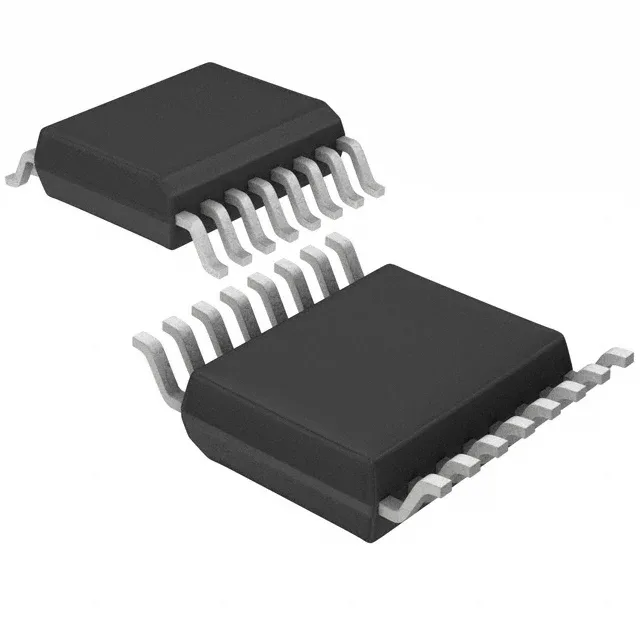
The ISO7762QDBQQ1 comes in a 16-pin SSOP package with 3.90 mm body width, a fine-pitch footprint that routes well on a two-layer board if the isolation creepage is managed. Surface-mount only. The 1.1 ns rise and 1.4 ns fall times are fast enough that signal-integrity matters — keep the trace length from the isolator output to the CAN transceiver under 20 mm, and place the decoupling capacitor within 2 mm of each supply pin. Pulse-width distortion is max 4.9 ns, and propagation delay is symmetrical at 16 ns max for both low-to-high and high-to-low transitions, which simplifies timing closure in the CAN bit-timing calculation.

Frequently asked questions

Is ISO7762QDBQQ1 automotive qualified?

Yes, the ISO7762QDBQQ1 is AEC-Q100 qualified, making it suitable for automotive applications including powertrain, battery management, and ADAS sensor interfaces.

What is the data rate of ISO7762QDBQQ1?

The ISO7762QDBQQ1 supports a data rate of 100 Mbps. While CAN-FD typically runs at 5-10 Mbps, this isolator's higher bandwidth allows it to handle other high-speed protocols or future CAN data-rate increases without requalification.