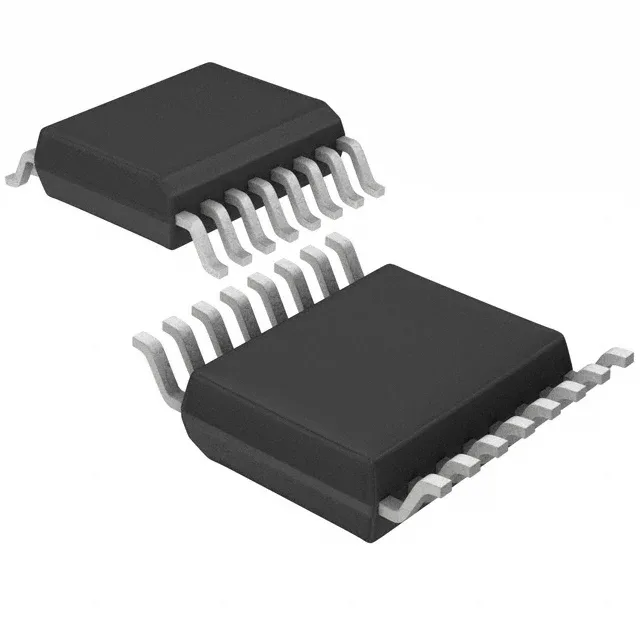
Texas Instruments ISO7762FQDBQRQ1 — Digital Isolators

TI ISO7762FQDBQRQ1 CAN Isolator, 100Mbps, 3000Vrms, AEC-Q100

MPNISO7762FQDBQRQ1
Active

Texas Instruments ISO7762FQDBQRQ1, Automotive AEC-Q100, CAN, Capacitive Coupling, 6-Channel Unidirectional Isolator, 100Mbps Data Rate, 3000Vrms Isolation, 16-SSOP Package, -40°C~125°C.

$4.3700Ref. price · indicative, final on quote
StockContact for availability
MOQ1 pcs
  • 100% new & originalTraceable channels only — no refurbs, no pulls, no remarked parts.
  • Date & lot codes on quoteStated per line before you commit; label photos on request.
  • MSL-compliant ESD packingMoisture-sealed bags with indicator cards; reels photo-verified.
  • PayPal buyer protectionPay by T/T, PayPal or Payoneer — card payments covered end to end.

Specifications

ISO7762FQDBQRQ1 Technical Specifications
ParameterValue
TypeCAN
SeriesAutomotive, AEC-Q100
Channel typeUnidirectional
Mounting typeSurface Mount
Voltage2.25V ~ 5.5V
Voltage - isolation3000Vrms
Isolated powerNo
Operating temperature-40°C~125°C
Pulse width distortion4.9ns
PackageTape & Reel (TR); Cut Tape (CT)
Data rate100Mbps
TechnologyCapacitive Coupling
Case16-SSOP (0.154\", 3.90mm Width)
Number of channels6
Inputs - side 1/Side 24/2
Rise (Fall time)1.1ns, 1.4ns
Propagation delay tpLH (tpHL)16ns, 16ns
Common mode transient immunity85kV/µs

Product details

Six-channel capacitive isolator for 100 Mbps CAN FD and automotive domains

The Texas Instruments ISO7762FQDBQRQ1 is a six-channel, unidirectional, capacitive-coupling digital isolator rated for CAN and other high-speed serial buses. It delivers a 100 Mbps data rate with 3000 Vrms isolation, packaged in a 16-pin SSOP (3.90 mm width).

100 Mbps with 16 ns propagation delay — timing margin for CAN FD

The 100 Mbps data rate and 16 ns max propagation delay (tpLH / tpHL) keep timing closure straightforward for CAN FD at 5 Mbps or for isolating SPI buses running at 20 MHz. The 1.1 ns rise and 1.4 ns fall times are fast enough to maintain signal integrity across the isolation barrier, but the unidirectional channel configuration (4 inputs on side 1, 2 on side 2) means you route the direction before layout — this is not a transceiver with a direction pin. Pulse-width distortion is held to 4.9 ns max, which preserves the duty cycle for CAN's bit-timing requirements. The 85 kV/µs common-mode transient immunity is the spec that matters in motor-drive or engine-bay environments where fast voltage transients couple across the barrier — this part survives those events without corrupting the data stream.

The supply range spans 2.25 V to 5.5 V on both sides, so you can run the CAN controller side at 3.3 V and the bus-side transceiver at 5 V without a separate level shifter. No isolated power is built in — you still need a separate DC/DC or isolated module to power the secondary side if the bus-side transceiver requires galvanically isolated supply.

It is AEC-Q100 qualified, which means it has passed the automotive-grade stress tests (high-temp operating life, temperature cycling, ESD, latch-up) required for under-hood and chassis-domain deployment.

Frequently asked questions

Is ISO7762FQDBQRQ1 compatible with 3.3 V logic?

Yes. The supply voltage range is 2.25 V to 5.5 V on both sides, so you can run the input side at 3.3 V and the output side at 5 V (or any combination within that range). No external level translation is needed between the isolator and a 3.3 V CAN controller.

Is ISO7762FQDBQRQ1 a direct replacement for ISO7762FDBQRQ1?

The ISO7762FQDBQRQ1 and ISO7762FDBQRQ1 share the same base product number ISO7762 and the same 16-SSOP package, supply range, isolation rating, and data rate. The suffix difference typically indicates packaging or ordering code variations (e.g., tape-and-reel vs. tube). Pin compatibility is expected within the ISO7762 family, but verify the specific suffix definition in the TI datasheet to confirm identical electrical performance.