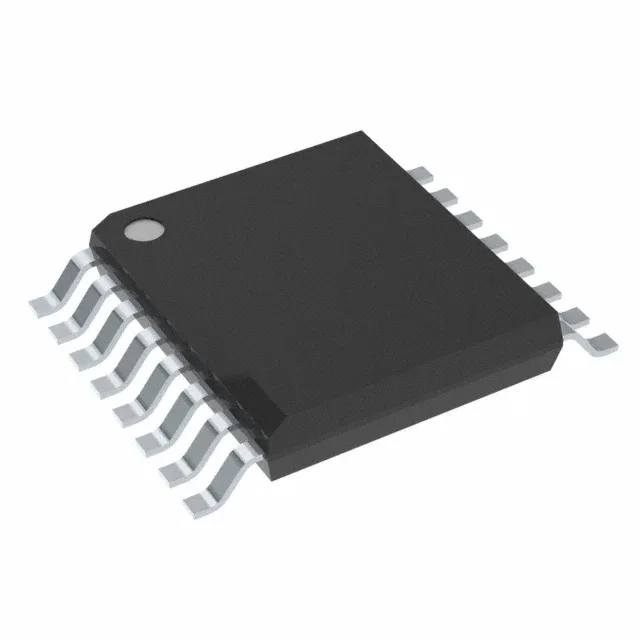
Texas Instruments ISO7741QDBQRQ1 — Digital Isolators

TI ISO7741QDBQRQ1 Digital Isolator, 100Mbps, 3000Vrms

MPNISO7741QDBQRQ1
Active

Texas Instruments ISO7741QDBQRQ1, Automotive AEC-Q100, General Purpose digital isolator, Capacitive Coupling, 4-channel unidirectional, 100Mbps data rate, 3000Vrms isolation, 85kV/µs CMTI, 2.25V~5.5V supply, -40°C~125°C, 16-SSOP package.

$3.3300Ref. price · indicative, final on quote
StockContact for availability
MOQ1 pcs
  • 100% new & originalTraceable channels only — no refurbs, no pulls, no remarked parts.
  • Date & lot codes on quoteStated per line before you commit; label photos on request.
  • MSL-compliant ESD packingMoisture-sealed bags with indicator cards; reels photo-verified.
  • PayPal buyer protectionPay by T/T, PayPal or Payoneer — card payments covered end to end.

Specifications

ISO7741QDBQRQ1 Technical Specifications
ParameterValue
TypeGeneral Purpose
SeriesAutomotive, AEC-Q100
Channel typeUnidirectional
Mounting typeSurface Mount
Voltage2.25V ~ 5.5V
Voltage - isolation3000Vrms
Isolated powerNo
Operating temperature-40°C~125°C
Pulse width distortion4.9ns
PackageTape & Reel (TR); Cut Tape (CT)
Data rate100Mbps
TechnologyCapacitive Coupling
Case16-SSOP (0.154\", 3.90mm Width)
Number of channels4
Inputs - side 1/Side 23/1
Rise (Fall time)2.4ns, 2.4ns
Propagation delay tpLH (tpHL)16ns, 16ns
Common mode transient immunity85kV/µs

Product details

AEC-Q100 qualified isolation for the automotive bus

The ISO7741QDBQRQ1: It provides 3000Vrms galvanic isolation across a 2.25V to 5.5V supply range on both sides, making it a drop-in solution for isolating SPI, UART, or general-purpose digital signals in a 16-SSOP footprint. The channel configuration is 3 inputs on side 1 and 1 input on side 2, all unidirectional, which matches the typical MCU-to-peripheral isolation split where the main data flow is outbound with a single feedback or fault line returning.

Timing budget: 100Mbps, 16ns propagation delay, 4.9ns pulse-width distortion

At 100Mbps data rate with a maximum propagation delay of 16ns (tpLH and tpHL), the ISO7741QDBQRQ1 fits comfortably into the timing budget for 50MHz SPI buses and fast UART links. The 4.9ns maximum pulse-width distortion means the duty cycle is preserved within a tight window — critical for CAN FD or SENT sensor interfaces where edge symmetry carries protocol timing. Rise and fall times are typically 2.4ns each, which keeps signal integrity clean on short PCB traces without needing external slew-rate limiting. For longer runs across a backplane, series termination at the source is worth evaluating.

CMTI and isolation: 85kV/µs minimum, 3000Vrms rated

The 85kV/µs minimum common-mode transient immunity is the headline robustness spec for this part. In a motor-drive inverter or on-board charger, fast-switching SiC or GaN stages can inject several kV/µs of common-mode noise across the isolation barrier. This rating gives enough headroom to avoid data corruption or latch-up in those environments. Capacitive coupling inherently handles high CMTI better than optocouplers at similar data rates. The 3000Vrms isolation voltage meets basic reinforced isolation requirements for 48V to 400V automotive systems per IEC 62368-1, though a full safety-certification package (e.g., VDE, UL) is not claimed in the listing — verify the specific safety standard your application requires.

Level translation across the supply gap

Because each side of the isolator has its own supply pin (VCC1 and VCC2, both accepting 2.25V to 5.5V), the ISO7741QDBQRQ1 inherently performs level translation. A 5V MCU domain on side 1 can talk directly to a 3.3V sensor or actuator on side 2 without an external voltage translator. The unidirectional channels mean the translation direction is fixed by the channel assignment — the 3/1 split is not symmetric, so confirm the signal direction matches your bus.

Lifecycle and sourcing posture

This is a current-production part suitable for both new design-in and ongoing volume builds. The base product number is ISO7741, and the full Q1 suffix denotes the automotive-qualified, tape-and-reel variant.

Frequently asked questions

Can ISO7741QDBQRQ1 be used for 5V to 3.3V level translation?

Yes. With independent supply pins on each side accepting 2.25V to 5.5V, you can power side 1 at 5V and side 2 at 3.3V. The unidirectional 3/1 channel split means the translation direction is fixed — confirm your signal flow matches the channel assignment.

What is the difference between ISO7741QDBQRQ1 and ISO7740?

The ISO7741 is a 4-channel unidirectional isolator with a 3/1 input split (three channels in one direction, one in the other). The ISO7740 is a different channel configuration — verify the datasheet's channel direction table to match your bus topology. Both share the same capacitive-coupling technology and 100Mbps data rate.