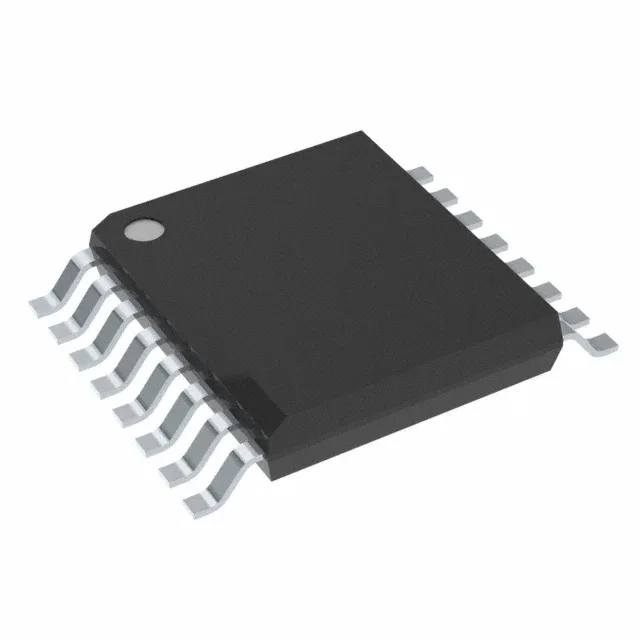
Texas Instruments ISO7741FDBQR — Digital Isolators

TI ISO7741FDBQR General-Purpose Isolator, 100 Mbps

MPNISO7741FDBQR
Active

Texas Instruments ISO7741FDBQR, General-Purpose digital isolator, Capacitive Coupling, 4-channel unidirectional, 100 Mbps, 3000 Vrms isolation, 85 kV/µs CMTI, 2.25 V to 5.5 V supply, -55°C to 125°C, 16-SSOP package.

$3.1700Ref. price · indicative, final on quote
StockContact for availability
MOQ1 pcs
  • 100% new & originalTraceable channels only — no refurbs, no pulls, no remarked parts.
  • Date & lot codes on quoteStated per line before you commit; label photos on request.
  • MSL-compliant ESD packingMoisture-sealed bags with indicator cards; reels photo-verified.
  • PayPal buyer protectionPay by T/T, PayPal or Payoneer — card payments covered end to end.

Specifications

ISO7741FDBQR Technical Specifications
ParameterValue
TypeGeneral Purpose
Channel typeUnidirectional
Mounting typeSurface Mount
Voltage2.25V ~ 5.5V
Voltage - isolation3000Vrms
Isolated powerNo
Operating temperature-55°C~125°C
Pulse width distortion4.9ns
PackageTape & Reel (TR); Cut Tape (CT)
Data rate100Mbps
TechnologyCapacitive Coupling
Case16-SSOP (0.154\", 3.90mm Width)
Number of channels4
Inputs - side 1/Side 23/1
Rise (Fall time)2.4ns, 2.4ns
Propagation delay tpLH (tpHL)16ns, 16ns
Common mode transient immunity85kV/µs

Product details

Capacitive-coupled isolation for 100 Mbps digital links

The Texas Instruments ISO7741FDBQR is a 4-channel, unidirectional, general-purpose digital isolator using capacitive-coupling technology. It is designed to pass digital signals across a galvanic isolation barrier rated at 3000 Vrms, with a data rate up to 100 Mbps. Typical applications include industrial fieldbus isolation (RS-485, CAN), SPI isolation, general-purpose digital I/O isolation, and isolated power-supply feedback loops where high common-mode transient immunity (85 kV/µs minimum) is needed to survive fast-switching power stages.

Channel assignment and signal direction

The ISO7741FDBQR has three channels on side 1 and one channel on side 2 (3/1 configuration), all unidirectional. This suits common isolation topologies like SPI, where SCLK, MOSI, and chip-select run from the controller to the peripheral (side 1 to side 2), and MISO returns the other direction (side 2 to side 1). The 2.4 ns typical rise/fall time and 16 ns maximum propagation delay keep timing margins tight enough for 100 Mbps clocked interfaces.

The wide supply range also helps when the rail droops under cold-crank conditions.

Package and footprint

The narrow SSOP footprint is common on mixed-signal boards where board area is at a premium. No isolated power is integrated — the part requires separate isolated supplies on each side.

Frequently asked questions

Is ISO7741FDBQR suitable for I2C isolation?

The ISO7741FDBQR has unidirectional channels only, so it cannot directly isolate bidirectional I2C data lines. For I2C isolation, you would need a part with bidirectional channels or external direction-control logic.

What is the difference between ISO7741FDBQR and ISO7740FDBQR?

The ISO7741FDBQR has a 3/1 channel configuration (three channels on side 1, one on side 2), while the ISO7740FDBQR has a 4/0 configuration (all four channels on side 1). The ISO7741 is the right choice when you need one channel crossing the barrier in the reverse direction, such as for SPI MISO.