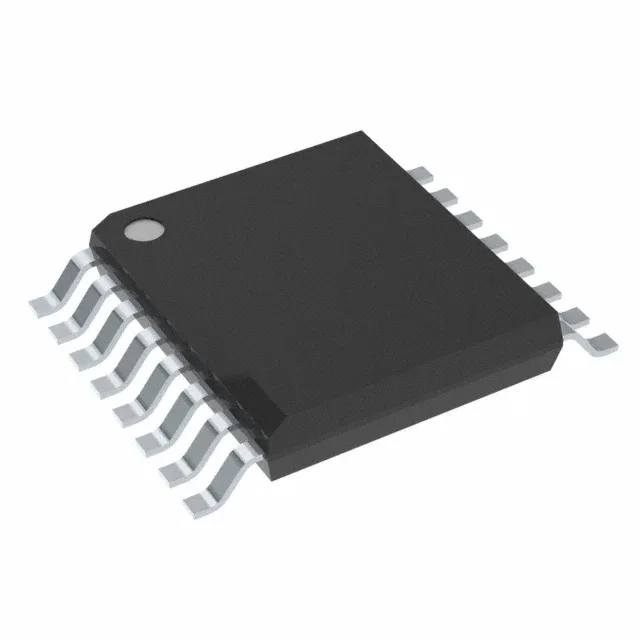
The Texas Instruments ISO7741FDBQ is a 4-channel, unidirectional digital isolator using capacitive coupling technology, rated for 2500 Vrms isolation and 100 Mbps data rate.
The 100 Mbps data rate supports full-speed CAN FD, RS-485, and SPI clock lines without adding propagation delay margin pressure. The 85 kV/µs common-mode transient immunity is the figure that matters in motor-drive and inverter environments: fast-switching SiC/GaN stages can couple several kV/µs across the isolation barrier, and this part's CMTI rating keeps the output from glitching. The 2.4 ns rise/fall times are fast enough for 100 Mbps but not so aggressive that they cause excessive EMI on a poorly laid-out board.
Supply range and channel configuration
The 3/1 input-side/side-2 split is a common pattern: three channels running from the low-voltage domain to the isolated side, one channel returning for a status or acknowledge signal. No isolated power is provided on-chip — the part is a signal isolator only, so each side needs its own local supply rail.
Package, footprint, and reflow considerations
Surface-mount assembly with a typical lead-free reflow profile works — no exotic pad geometry or via-in-pad required.