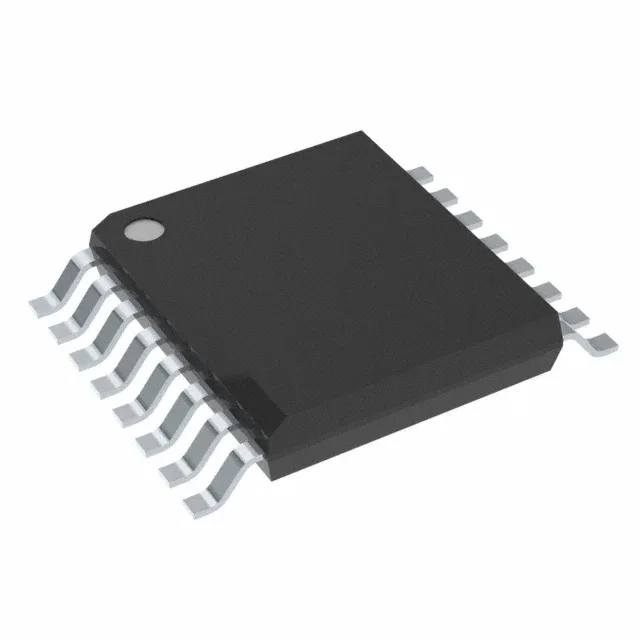
Texas Instruments ISO7741DBQR — Digital Isolators

TI ISO7741DBQR Digital Isolator, 100 Mbps, 3000 Vrms

MPNISO7741DBQR
Active

Texas Instruments ISO7741DBQR, General Purpose digital isolator, Capacitive Coupling, 4-channel unidirectional, 100Mbps data rate, 3000Vrms isolation, 2.25V~5.5V supply, -55°C~125°C, 16-SSOP package.

$3.1700Ref. price · indicative, final on quote
Independent supplier — new & surplus stockAuthenticity-screened · ESD-safe packingListing updated Aug 2026

Specifications

ISO7741DBQR specifications
ParameterValue
TypeGeneral Purpose
Channel typeUnidirectional
MountingSurface Mount
Supply voltage2.25V ~ 5.5V
Voltage - isolation3000Vrms
Isolated powerNo
Operating temperature-55°C~125°C
Pulse width distortion4.9ns
PackageTape & Reel (TR); Cut Tape (CT)
Data rate100Mbps
TechnologyCapacitive Coupling
Case16-SSOP (0.154\", 3.90mm Width)
Channels4
Inputs - side 1/Side 23/1
Rise (Fall time)3.9ns, 3.9ns
Propagation delay tpLH (tpHL)16ns, 16ns
Common mode transient immunity85kV/µs

Product details

What this isolator covers — and what it doesn't

The Texas Instruments ISO7741DBQR is a 4-channel capacitive-coupling digital isolator rated for 3000 Vrms isolation and 100 Mbps data rate. It uses capacitive coupling technology, so there's no LED aging or current-transfer-ratio drift you'd budget for with optocouplers. The 3/1 channel direction split (three forward, one reverse) fits SPI or isolated I²C links where the clock and data lines run in opposite directions.

85 kV/µs CMTI — why it matters for motor drives and inverters

In a motor-drive or switched-mode power supply, the switching node can slam the barrier with several hundred volts in a few nanoseconds. If the isolator's CMTI is too low, data corrupts or the output latches. 85 kV/µs is well into the range needed for SiC and GaN gate-drive feedback paths, not just IGBT-based drives.

Propagation delay and pulse-width distortion — timing budget check

Maximum propagation delay is 16 ns in either direction, and pulse-width distortion is held to 4.9 ns. For a 100 Mbps link (10 ns bit period), 16 ns eats into the timing margin — you'll want to verify setup/hold at the receiver, especially if you're daisy-chaining multiple isolators. Rise and fall times are symmetrical at 3.9 ns typical, which keeps the eye open without excessive ringing.

Temperature range and package — where it goes

Frequently asked questions

Is ISO7741DBQR obsolete?

No. No discontinuation notice has been issued.

What is the difference between ISO7741DBQR and ISO7740DBQR?

The ISO7741 has a 3/1 channel direction split (three forward, one reverse), while the ISO7740 is a 4/0 configuration (all four channels forward). Choose the ISO7741 when you need one reverse channel for a bidirectional signal like SPI MISO or I²C data.