3000Vrms isolation, 100Mbps — the automotive-grade digital isolator for noisy power trains
The Texas Instruments ISO7731QDBQRQ1 is a 3-channel, unidirectional digital isolator using capacitive coupling technology, designed for automotive and industrial applications requiring galvanic isolation up to 3000Vrms. It supports a data rate of 100Mbps with propagation delays of 16ns max and pulse-width distortion under 4.9ns, making it suitable for isolating high-speed SPI, UART, and CAN buses in electric vehicle traction inverters, battery management systems, and on-board chargers.
85kV/µs CMTI — why it matters for motor-drive and inverter isolation
Common-mode transient immunity (CMTI) is rated at a minimum of 85kV/µs, which means this isolator maintains data integrity when fast-switching IGBTs or SiC MOSFETs slam the ground reference by thousands of volts per microsecond. In a traction inverter or DC-DC converter, that CMTI floor prevents bit errors and false triggering on the digital interface. The 1.3ns rise and 1.4ns fall times (typical) keep signal edges clean for 100Mbps signaling even with the capacitive coupling path.
2/1 channel configuration and supply flexibility
The ISO7731QDBQRQ1 provides two channels on side 1 and one channel on side 2, a common split for isolating a 3-wire SPI bus (SCLK, MOSI on the primary side, MISO on the secondary) or a CAN transceiver with TX/RX and an enable signal. The supply range spans 2.25V to 5.5V on both sides, so it interfaces directly with 3.3V and 5V logic domains without external level shifters. No isolated DC-DC converter is integrated — plan for a separate isolated power supply or a device with integrated power if board space is tight.
Package and footprint for production
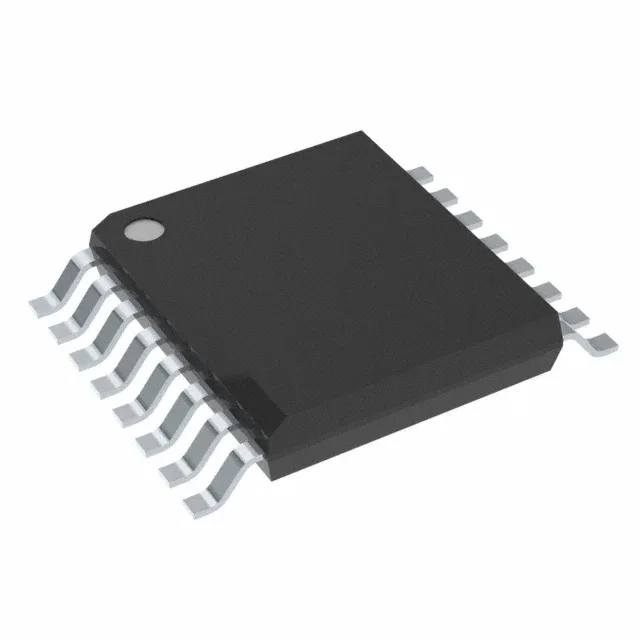
The 16-SSOP footprint is common across TI's ISO773x family, so a board layout can accommodate multiple density options without a PCB respin.
The automotive-grade qualification also implies the device has passed the full suite of stress tests (high-temperature operating life, temperature cycling, ESD, latch-up) required by Tier-1 automotive suppliers. If dual-sourcing is a concern, the ISO7731 base product number shares the same footprint and pinout across the Q and non-Q variants, though only the QDBQRQ1 carries the AEC-Q100 stamp.