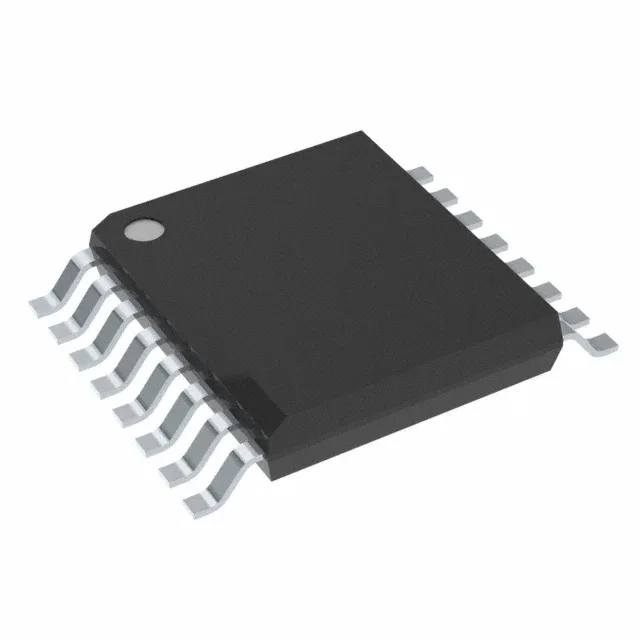
Texas Instruments ISO7731FDBQ — Digital Isolators

TI ISO7731FDBQ 3-Ch Digital Isolator, 100 Mbps, 3000 Vrms

MPNISO7731FDBQ
Active

Texas Instruments ISO7731FDBQ, General Purpose digital isolator, 3 channels unidirectional, capacitive coupling, 100Mbps data rate, 3000Vrms isolation, 16-SSOP package, -55°C~125°C.

$3.0300Ref. price · indicative, final on quote
StockContact for availability
MOQ1 pcs
  • 100% new & originalTraceable channels only — no refurbs, no pulls, no remarked parts.
  • Date & lot codes on quoteStated per line before you commit; label photos on request.
  • MSL-compliant ESD packingMoisture-sealed bags with indicator cards; reels photo-verified.
  • PayPal buyer protectionPay by T/T, PayPal or Payoneer — card payments covered end to end.

Specifications

ISO7731FDBQ Technical Specifications
ParameterValue
TypeGeneral Purpose
Channel typeUnidirectional
Mounting typeSurface Mount
Voltage2.25V ~ 5.5V
Voltage - isolation3000Vrms
Isolated powerNo
Operating temperature-55°C~125°C
Pulse width distortion4.9ns
PackageTube
Data rate100Mbps
TechnologyCapacitive Coupling
Case16-SSOP (0.154\", 3.90mm Width)
Number of channels3
Inputs - side 1/Side 22/1
Rise (Fall time)1.3ns, 1.4ns
Propagation delay tpLH (tpHL)16ns, 16ns
Common mode transient immunity85kV/µs

Product details

Three-channel capacitive isolator for signal-chain galvanic separation

The Texas Instruments ISO7731FDBQ is a three-channel digital isolator using capacitive coupling technology to provide galvanic isolation across a 3000 Vrms barrier. It supports unidirectional data transmission at 100 Mbps across three channels configured as two on side 1 and one on side 2. With a propagation delay of 16 ns max and pulse-width distortion under 4.9 ns, this isolator suits timing-sensitive interfaces like SPI, UART, and general-purpose digital I/O where signal integrity across the isolation boundary matters. The 85 kV/µs common-mode transient immunity rating means it holds its state through fast voltage transients typical in motor drives, inverters, and industrial power stages.

The 100 Mbps data rate covers most digital interfaces used in industrial control — SPI clocks up to 50 MHz, UART at several Mbps, and parallel status lines. The 16 ns max propagation delay (same for rising and falling edges) adds about 32 ns round-trip to a handshake, which is negligible for most control loops but worth budgeting if the design closes a feedback path through the isolation barrier at high speed. Pulse-width distortion at 4.9 ns max keeps the duty cycle distortion low enough that the isolator won't introduce jitter that trips clocked receivers. The 1.3 ns rise and 1.4 ns fall times are symmetric, which helps maintain signal shape through the capacitive coupling stage.

Rated across the full military temperature range, the ISO7731FDBQ is specified for environments that see extreme thermal cycling: outdoor telecom cabinets, engine-bay electronics, downhole instrumentation, and avionics bays.

Frequently asked questions

What is the difference between ISO7731FDBQ and ISO7730FDBQ?

The ISO7731FDBQ has a 2/1 channel configuration (two inputs on side 1, one on side 2), while the ISO7730FDBQ uses a 3/0 channel configuration (all three channels oriented the same direction). The channel direction mapping is the primary difference between the two devices in the same family.

Can ISO7731FDBQ be used for I2C isolation?

I2C requires bidirectional data lines, and the ISO7731FDBQ has unidirectional channels only. For I2C isolation you would typically need a dedicated I2C isolator with bidirectional capability or an external direction-control scheme. This part is better suited for unidirectional signals like SPI, UART, or discrete I/O.