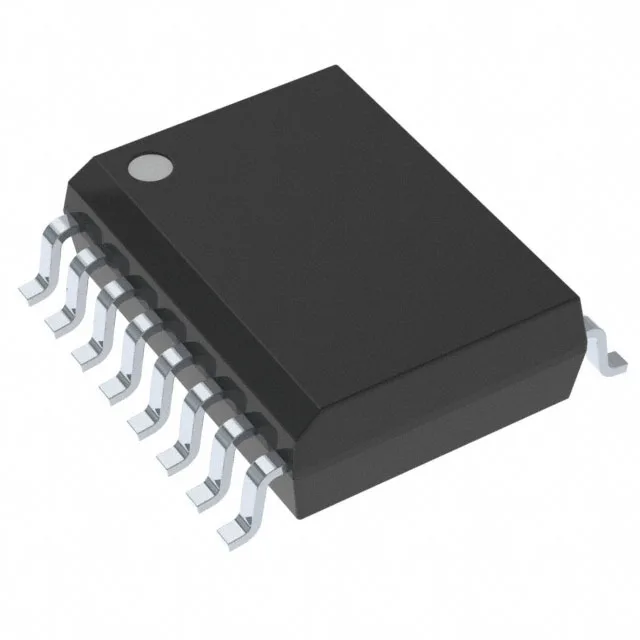
Texas Instruments ISO7731DWR — Digital Isolators

TI ISO7731DWR Digital Isolator, 100 Mbps, 5000 Vrms, 16-SOIC

MPNISO7731DWR
Active

Texas Instruments ISO7731DWR, General Purpose, 3-Channel Unidirectional Digital Isolator, Capacitive Coupling, 100Mbps, 5000Vrms, 2.25V~5.5V, -55°C~125°C, 16-SOIC.

$3.0300Ref. price · indicative, final on quote
StockContact for availability
MOQ1 pcs
  • 100% new & originalTraceable channels only — no refurbs, no pulls, no remarked parts.
  • Date & lot codes on quoteStated per line before you commit; label photos on request.
  • MSL-compliant ESD packingMoisture-sealed bags with indicator cards; reels photo-verified.
  • PayPal buyer protectionPay by T/T, PayPal or Payoneer — card payments covered end to end.

Specifications

ISO7731DWR Technical Specifications
ParameterValue
TypeGeneral Purpose
Channel typeUnidirectional
Mounting typeSurface Mount
Voltage2.25V ~ 5.5V
Voltage - isolation5000Vrms
Isolated powerNo
Operating temperature-55°C~125°C
Pulse width distortion4.9ns
PackageTape & Reel (TR); Cut Tape (CT)
Data rate100Mbps
TechnologyCapacitive Coupling
Case16-SOIC (0.295\", 7.50mm Width)
Number of channels3
Inputs - side 1/Side 22/1
Rise (Fall time)1.3ns, 1.4ns
Propagation delay tpLH (tpHL)16ns, 16ns
Common mode transient immunity85kV/µs

Product details

Three-channel capacitive isolator for high-speed signal isolation

The Texas Instruments ISO7731DWR is a three-channel, unidirectional digital isolator using capacitive coupling technology. It is designed to transmit digital signals across an isolation barrier at data rates up to 100 Mbps, with a reinforced isolation rating of 5000 Vrms. Typical applications include industrial fieldbus interfaces, isolated SPI/UART links, motor-drive feedback paths, and medical equipment requiring galvanic isolation for patient safety.

The 100 Mbps data rate is fast enough to handle full-speed SPI, CAN FD at 5 Mbps, and most UART-based protocols without timing compression. Propagation delay is 16 ns max, and pulse-width distortion is held to 4.9 ns max, so the output pulse width stays close to the input — important for maintaining duty cycle in PWM or encoder signals. Rise and fall times are 1.3 ns and 1.4 ns typical, which keeps edge-rate-induced ringing manageable on short PCB traces.

Isolation and transient immunity for noisy environments

The 5000 Vrms isolation voltage qualifies the ISO7731DWR for reinforced insulation per IEC 60747-5-5 and VDE 0884-11, making it suitable for medical and grid-tied applications where safety certification is required. Common-mode transient immunity is rated at 85 kV/µs minimum — this is the key spec for motor drives and inverter-fed systems where fast-switching IGBTs or SiC FETs couple high dv/dt noise across the barrier. A low CMTI number would cause data corruption in those environments; 85 kV/µs gives enough margin for most industrial drives.

Temperature range and deployment environment

The wide range also covers cold-start conditions in arctic deployments and self-heating in sealed enclosures.

Package and footprint

Housed in a 16-pin SOIC wide-body package (16-SOIC, 7.50 mm body width), the ISO7731DWR provides the creepage and clearance distances needed to maintain 5000 Vrms isolation. The wide-body SOIC is a standard footprint for high-voltage isolators, and the surface-mount package is compatible with reflow soldering processes.

Frequently asked questions

What is the difference between ISO7731DWR and ISO7730DWR?

The ISO7731DWR provides three unidirectional channels with a 2/1 input-to-output split (two inputs on side 1, one input on side 2). The ISO7730DWR has a different channel configuration — typically 3/0 or 0/3 depending on the variant. Both share the same 100 Mbps data rate, 5000 Vrms isolation, and 16-SOIC package, so they are footprint-compatible but differ in signal direction mapping. Check the channel count and direction against your application's isolation requirements.

What is the data rate of ISO7731DWR?

The ISO7731DWR supports a maximum data rate of 100 Mbps. This is sufficient for high-speed SPI, CAN FD, and most serial interfaces used in industrial and automotive systems.