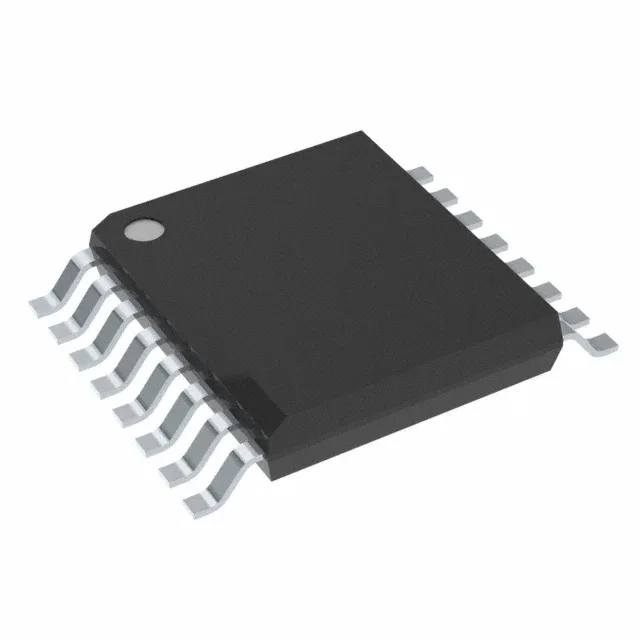
What this isolator brings to the board
The Texas Instruments ISO7731DBQR is a three-channel, unidirectional digital isolator using capacitive coupling to pass signals across a 3000 Vrms isolation barrier at up to 100 Mbps.
Channel count and direction — what the 2/1 split buys you
Three unidirectional channels are configured as two on side 1 and one on side 2. That 2/1 split maps cleanly to a typical SPI bus: SCLK and MOSI forward, MISO reverse. For a half-duplex RS-485 or CAN interface, the single reverse channel handles the receive path while the two forward channels carry control and data. The unidirectional architecture also keeps propagation delay symmetric — 16 ns max in both directions — so timing closure on the bus is straightforward.