5000 Vrms isolation — what it buys you
The 5000 Vrms isolation rating is the headline spec for safety-critical designs. It means this part can withstand a 5 kV potential between input and output for 1 minute per UL 1577, which qualifies it for reinforced insulation in medical (IEC 60601) and industrial (IEC 61010) applications.
100 Mbps data rate and 85 kV/µs CMTI
The 100 Mbps data rate covers most common serial protocols — isolated SPI at 50 MHz, RS-485 at 20 Mbps, or CAN at 1 Mbps — without overspecifying for a slower bus. A part with CMTI below 50 kV/µs can glitch or latch in those environments; this one keeps the data clean.
Channel layout and unidirectional flow
The three channels are configured as two inputs on side 1 and one input on side 2 — unidirectional only, so data flows one way per channel. That matches the typical pattern where a microcontroller on side 1 sends control signals (chip select, clock, data) across the barrier and receives a single feedback or fault signal back. If you need bidirectional data on a single channel, look at the ISO7730 family or add a separate isolator for the return path.
Package and supply — board-fit notes
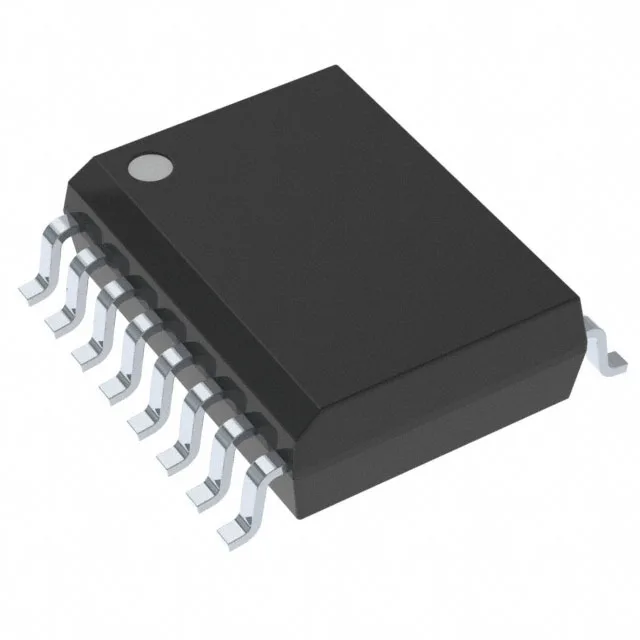
The part is surface-mount only, so plan for reflow or hot-air rework; no socket option for field swapping.