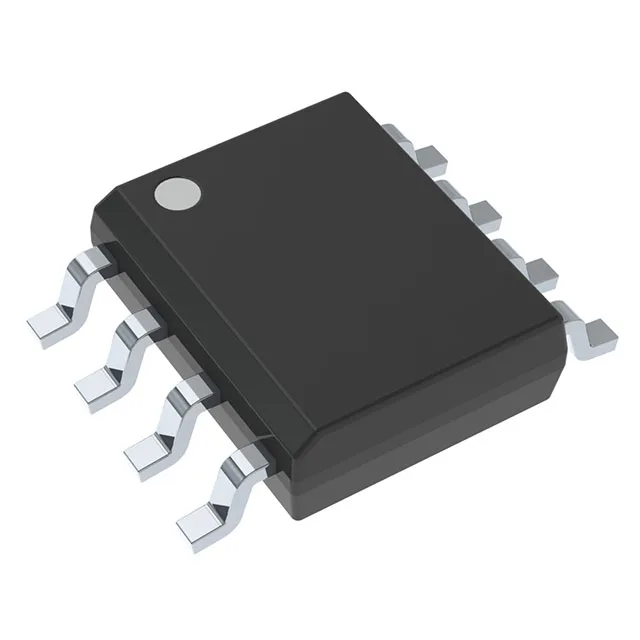
3000 Vrms isolation — the safety barrier that defines the fit
It is a general-purpose device, meaning it is not tied to a specific protocol (like I²C or RS-485) but passes digital logic levels up to 100 Mbps. The 3000 Vrms rating is the primary spec that determines where this part goes: it meets the basic isolation requirements for industrial motor drives, power supplies, medical equipment, and telecom infrastructure where a 3 kV reinforced barrier is needed between a controller and a high-voltage domain.
100 Mbps data rate and 85 kV/µs CMTI — the throughput and noise immunity
The 100 Mbps data rate sets the maximum signal frequency the isolator can pass with a propagation delay of 16 ns (max) and a pulse-width distortion of 4.9 ns (max). This is fast enough for SPI buses, general-purpose GPIO isolation, and encoder interfaces, but not for high-speed serial links like Gigabit Ethernet. At 85 kV/µs, the ISO7720FD handles the transients typical in a 3-phase inverter bridge without corrupting the control signal.