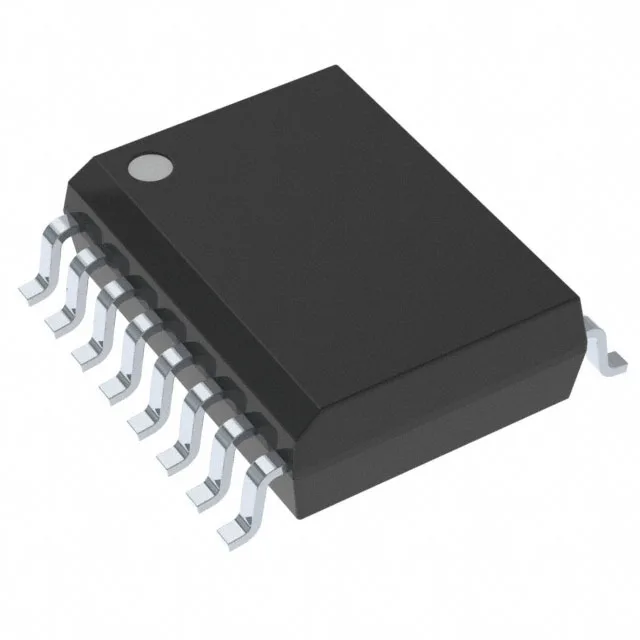
4243Vrms isolation — where it fits in the system
The 1 Mbps data rate is adequate for GPIO isolation, slow SPI (up to a few MHz), or UART handshake lines, but it will bottleneck a full-speed CAN or Ethernet interface — keep that in mind when reading the BOM.
Propagation delay and CMTI — the real-world margins
Propagation delay is 14 ns max in both directions, with a pulse-width distortion of 3.7 ns max. That is tight enough for most control-loop isolation where timing skew between channels matters. The common-mode transient immunity of 25 kV/µs is a strong number — it means the output won't glitch when a nearby relay or IGBT switches, which is the failure mode that kills a fieldbus link in a noisy cabinet. Rise and fall times are 1 ns typical, so the signal edges are clean but the layout needs care to avoid ringing on long traces.
Supply rails and temperature range
That means it can translate between a 3.3 V MCU domain and a 5 V sensor or actuator interface without an extra level shifter.
The wide pitch helps with creepage distance on the PCB — important when you are trying to meet 4243Vrms isolation without routing slots under the part.
ROHS3 compliant. For dual-sourcing resilience, the closest functional peer is the ISO7221CDR (same 2-channel unidirectional topology, 25 Mbps data rate, 2500Vrms isolation), but the ISO7221CDR has a lower isolation rating and a narrower supply range — verify the isolation requirement before swapping.