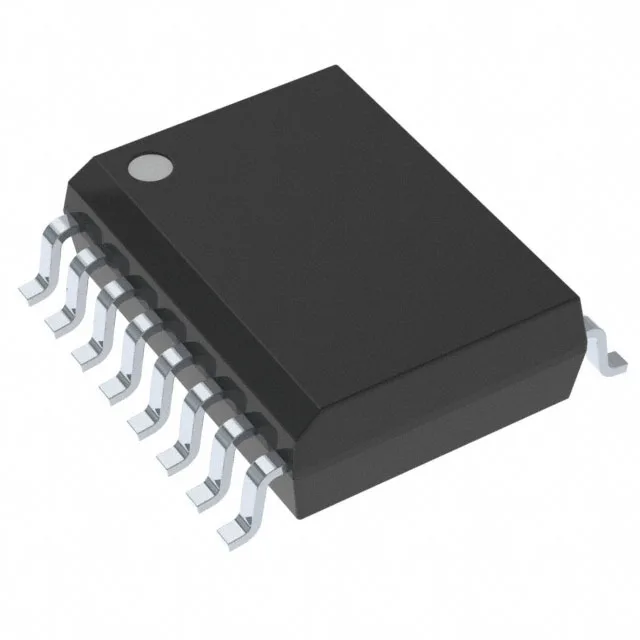
Texas Instruments ISO7241CDWG4 — Digital Isolators

TI ISO7241CDWG4 Digital Isolator, 25 Mbps, 2500 Vrms

MPNISO7241CDWG4
End of Life

Texas Instruments ISO7241CDWG4, General Purpose digital isolator, Capacitive Coupling, 4-channel unidirectional, 25Mbps data rate, 2500Vrms isolation, 3.15V~5.5V supply, -40°C~125°C, 16-SOIC package, Tube.

$58.8000Ref. price · indicative, final on quote
StockContact for availability
MOQ1 pcs
  • 100% new & originalTraceable channels only — no refurbs, no pulls, no remarked parts.
  • Date & lot codes on quoteStated per line before you commit; label photos on request.
  • MSL-compliant ESD packingMoisture-sealed bags with indicator cards; reels photo-verified.
  • PayPal buyer protectionPay by T/T, PayPal or Payoneer — card payments covered end to end.

Specifications

ISO7241CDWG4 Technical Specifications
ParameterValue
TypeGeneral Purpose
Channel typeUnidirectional
Mounting typeSurface Mount
Voltage3.15V ~ 5.5V
Voltage - isolation2500Vrms
Isolated powerNo
Operating temperature-40°C~125°C
Pulse width distortion2.5ns
PackageTube
Data rate25Mbps
TechnologyCapacitive Coupling
Case16-SOIC (0.295\", 7.50mm Width)
Number of channels4
Inputs - side 1/Side 23/1
Rise (Fall time)2ns, 2ns
Propagation delay tpLH (tpHL)42ns, 42ns
Common mode transient immunity25kV/µs

Product details

The Texas Instruments ISO7241CDWG4 is a quad-channel, unidirectional digital isolator using capacitive coupling. It delivers 25 Mbps per channel — fast enough for Profibus, DeviceNet, and SPI-level isolation without the cost of a 150 Mbps part. The 2500 Vrms isolation rating is basic isolation, suited for non-mains applications or designs where the system already provides reinforced isolation elsewhere. Common-mode transient immunity (CMTI) is rated at 25 kV/µs minimum, which handles the fast switching edges in motor drives, inverters, and industrial power supplies without data corruption.

Channel configuration and supply flexibility

Three channels run from Side 1 to Side 2, one channel runs the opposite direction — a 3/1 split that matches many half-duplex bus interfaces or mixed-direction sensor links. No integrated DC-DC converter means you need an isolated power supply on the secondary side if the load requires it.

Timing and signal integrity

Propagation delay is 42 ns max in both directions, with pulse-width distortion held to 2.5 ns max. Rise and fall times are 2 ns typical — fast edges that keep the signal clean but also mean the PCB layout should treat the output traces as controlled-impedance lines if the trace length exceeds a few inches.

The 125°C upper limit covers the hot spots near power stages and enclosures that see direct sun.

Frequently asked questions

What is the difference between ISO7241CDWG4 and ISO7241C?

The ISO7241C is the same base device in a narrower 16-SOIC body (7.50 mm vs. the wide-body package of the ISO7241CDWG4). The wide-body version provides greater creepage distance for the same 2500 Vrms isolation rating, which can simplify PCB layout for high-voltage clearance requirements.

Can ISO7241CDWG4 be used for SPI isolation?

Yes. The 25 Mbps data rate supports SPI clock rates up to 25 MHz, and the unidirectional channel configuration (3 channels one way, 1 the other) matches the typical SPI signal set (SCK, MOSI, MISO, and a chip-select). The 42 ns propagation delay adds about one clock cycle of latency at 25 MHz, which is acceptable for most SPI peripherals.

What is the propagation delay of ISO7241CDWG4?

Maximum propagation delay is 42 ns for both rising and falling edges (tpLH and tpHL). Pulse-width distortion is limited to 2.5 ns max, so the output pulse width closely matches the input.