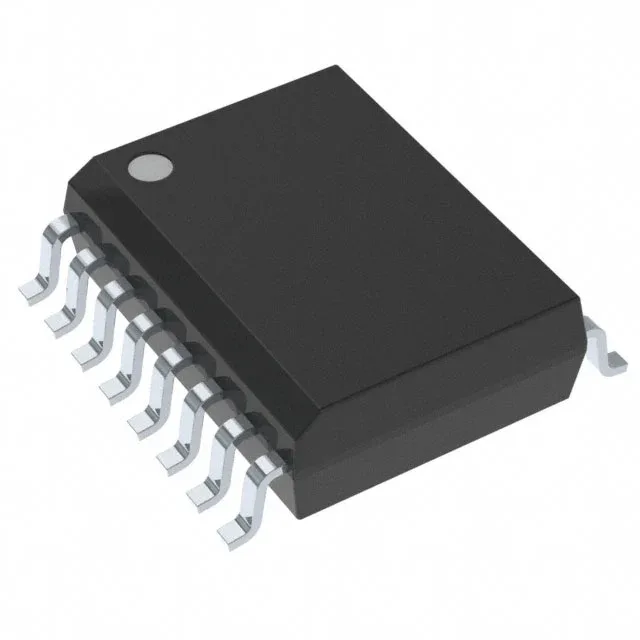
Texas Instruments ISO7231CDWR — Digital Isolators

ISO7231CDWR Digital Isolator, 2500Vrms, 25Mbps, 16-SOIC

MPNISO7231CDWR
End of Life

Texas Instruments ISO7231CDWR, General Purpose digital isolator, Capacitive Coupling, 3 unidirectional channels, 2500Vrms isolation, 25Mbps data rate, 16-SOIC wide-body package, -40°C to 125°C, ROHS3 compliant.

$4.8Ref. price · indicative, final on quote
Packaging16-SOIC (0.295", 7.50mm Width)
StockContact for availability
MOQ1 pcs
  • 100% new & originalTraceable channels only — no refurbs, no pulls, no remarked parts.
  • Date & lot codes on quoteStated per line before you commit; label photos on request.
  • MSL-compliant ESD packingMoisture-sealed bags with indicator cards; reels photo-verified.
  • PayPal buyer protectionPay by T/T, PayPal or Payoneer — card payments covered end to end.

Specifications

ISO7231CDWR Technical Specifications
ParameterValue
TypeGeneral Purpose
Channel typeUnidirectional
Mounting typeSurface Mount
Voltage3.15V ~ 5.5V
Voltage - isolation2500Vrms
Isolated powerNo
Operating temperature-40°C ~ 125°C
Pulse width distortion2.5ns
PackageTape & Reel (TR); Cut Tape (CT)
Data rate25Mbps
TechnologyCapacitive Coupling
Case16-SOIC (0.295\", 7.50mm Width)
Number of channels3
Inputs - side 1/Side 22/1
Rise (Fall time)2ns, 2ns
Propagation delay tpLH (tpHL)42ns, 42ns
Common mode transient immunity25kV/µs

Product details

Active production — 2500 Vrms capacitive isolator in wide SOIC

The Texas Instruments ISO7231CDWR is a general-purpose digital isolator using capacitive coupling to transfer signals across a 2500 Vrms isolation barrier. It packs three unidirectional channels in a 2/1 input-side/side-2 configuration, each rated for 25 Mbps data rate with 42 ns max propagation delay and 2.5 ns pulse-width distortion. The wide-body 16-SOIC package (7.50 mm body width) provides the creepage distance needed for reinforced isolation in industrial and motor-drive applications.

25 kV/µs CMTI — why it matters for motor drives and inverters

Common-mode transient immunity is rated at a minimum 25 kV/µs. In a variable-frequency drive or servo amplifier, the fast voltage slew on the motor phases couples through parasitic capacitance into the isolation barrier. If the isolator's CMTI is too low, the output glitches or latches, corrupting the gate-drive or encoder feedback. The 25 kV/µs floor here handles most industrial inverter rails up to 600 V bus without extra filtering.

The supply range spans 3.15 V to 5.5 V, so the same part works on a 3.3 V MCU side and a 5 V field-side interface without a separate level shifter. No derating needed for the isolation rating across this range.

Capacitive coupling vs optocouplers — no LED aging, consistent timing

Capacitive coupling uses on-chip SiO₂ capacitors rather than an LED and photodetector. The key advantage: no current-transfer-ratio (CTR) degradation over temperature or lifetime, so propagation delay and pulse-width distortion stay stable from first power-up to end of life. The 2 ns typical rise/fall time and 2.5 ns max pulse-width distortion make this part suitable for isolating SPI or UART links at 25 Mbps without bit-error concerns.

Package and footprint — wide-body 16-SOIC for creepage

Surface-mount assembly with standard reflow profiles; the wide-body footprint is shared across the ISO72xx family, so a layout designed for the ISO7231M or ISO7231 will accept this part without changes.

Frequently asked questions

Is the ISO7231CDWR still in production?

Buyers need to know lifecycle before committing to a design or replacement.

Where can I buy ISO7231CDWR in stock?

Sourcing buyers need immediate availability to fulfill BOM lines.

What is the price of ISO7231CDWR?

Cost is critical for budget and procurement decisions.

What is the difference between ISO7231CDWR and ISO7231M?

Engineers compare similar parts to validate fit and performance.

Can ISO7231CDWR be used as a replacement for ISO7231?

Maintenance techs and buyers need drop-in compatibility for failed units.

What is the lead time for ISO7231CDWR?

Lead time affects project scheduling and inventory planning.