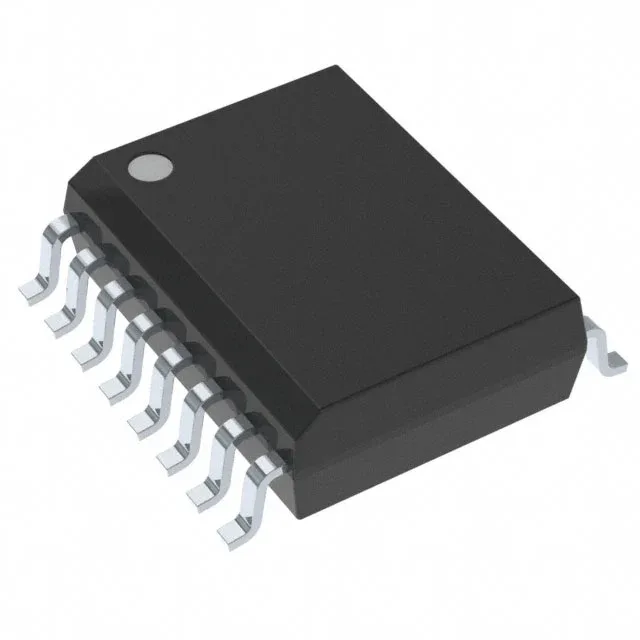
Texas Instruments ISO6763DWR — Digital Isolators

TI ISO6763DWR 6-ch digital isolator, 50 Mbps, 5000 Vrms

MPNISO6763DWR
End of Life

Texas Instruments ISO6763DWR, ISO676x series, six-channel unidirectional digital isolator, 50 Mbps data rate, 5000 Vrms isolation, capacitive coupling, 16-SOIC, -40°C to 125°C.

$3.36Ref. price · indicative, final on quote
Packaging16-SOIC (0.295", 7.50mm Width)
StockContact for availability
MOQ1 pcs
  • 100% new & originalTraceable channels only — no refurbs, no pulls, no remarked parts.
  • Date & lot codes on quoteStated per line before you commit; label photos on request.
  • MSL-compliant ESD packingMoisture-sealed bags with indicator cards; reels photo-verified.
  • PayPal buyer protectionPay by T/T, PayPal or Payoneer — card payments covered end to end.

Specifications

ISO6763DWR Technical Specifications
ParameterValue
TypeCAN, RS232, RS485, SPI
SeriesISO676x
Channel typeUnidirectional
Mounting typeSurface Mount
Voltage1.71V ~ 1.89V, 2.25V ~ 5.5V
Voltage - isolation5000Vrms
Isolated powerNo
Operating temperature-40°C ~ 125°C
Pulse width distortion7ns
PackageTape & Reel (TR); Cut Tape (CT)
Data rate50Mbps
TechnologyCapacitive Coupling
Case16-SOIC (0.295\", 7.50mm Width)
Number of channels6
Inputs - side 1/Side 23/3
Rise (Fall time)4.5ns, 4.5ns (Max)
Propagation delay tpLH (tpHL)18ns, 18ns
Common mode transient immunity50kV/µs

Product details

Six-channel unidirectional isolator for industrial buses

The Texas Instruments ISO6763DWR is a six-channel, unidirectional digital isolator from the ISO676x family using capacitive coupling technology. It supports multiple serial protocols including CAN, RS232, RS485, and SPI, making it a versatile isolation solution for industrial communication interfaces. Key characteristics include a 50 Mbps data rate, 5000 Vrms isolation voltage, and 50 kV/µs common-mode transient immunity.

50 Mbps data rate and 18 ns propagation delay — timing margin for SPI and CAN

The 50 Mbps data rate, combined with a maximum propagation delay of 18 ns (tpLH / tpHL) and pulse-width distortion of 7 ns, gives enough timing margin for most SPI, CAN, and RS-485 links up to 50 Mbps. The 4.5 ns typical rise/fall time keeps signal integrity clean on the 16-SOIC footprint. For a 50 Mbps SPI clock, the 18 ns delay adds about one clock period of latency — budget that in your read-back timing if you are polling status registers across the barrier.

5000 Vrms reinforced isolation and 50 kV/µs CMTI — survives motor-drive transients

The 5000 Vrms isolation rating provides reinforced isolation for industrial equipment requiring safety isolation per IEC 60747-5-5. The 50 kV/µs common-mode transient immunity means this isolator will not glitch when a motor drive or inverter switches 600 V in a few nanoseconds — a common failure point for optocouplers and older capacitive isolators. The capacitive coupling technology inherently handles these fast edges better than opto-based solutions.

Channel configuration: 3 inputs on side 1, 3 inputs on side 2

The six channels are split 3/3 — three inputs on side 1 and three inputs on side 2 — all unidirectional. This means three channels run from the primary-side supply to the secondary, and three run the opposite direction. That matches the signal flow of a typical SPI isolator (SCLK, MOSI, CS from master to slave; MISO from slave to master) plus one extra channel each way for a reset or enable signal.

The ISO6763QDWRQ1 automotive-grade variant (AEC-Q100 qualified, 100 kV/µs CMTI) is a separate order code for designs requiring automotive qualification.

Frequently asked questions

What is the difference between ISO6763DWR and ISO6760DWR?

The ISO6763DWR has a 3/3 input/output channel split (three channels in each direction), while the ISO6760DWR has all six channels oriented in the same direction (6/0). Both parts share the same 50 Mbps data rate, 5000 Vrms isolation, 18 ns propagation delay, and 16-SOIC package. The choice depends on whether your application needs bidirectional isolation (ISO6763) or all signals flowing one way (ISO6760).

Can ISO6763DWR be used for SPI isolation?

Yes. The six unidirectional channels with a 3/3 split are well suited for SPI isolation: three channels from master to slave (SCLK, MOSI, CS) and three from slave to master (MISO plus two spare for interrupt or reset signals). The 50 Mbps data rate supports SPI clock speeds up to 50 MHz, and the 18 ns propagation delay is within the timing budget for most SPI peripherals.