It supports common industrial bus protocols — CAN, RS-232, RS-485, and SPI — at data rates up to 50 Mbps. The four channels are all on the input side (side 1), making it a straight-through forward-direction isolator for applications like isolated SPI, RS-485 transceiver isolation, or CAN bus node isolation.
The 50 Mbps data rate covers the vast majority of industrial serial links: SPI at 20–40 MHz clock, RS-485 at 10–50 Mbps, and CAN FD at up to 8 Mbps. A CMTI of 100 kV/µs means the output won't glitch or latch when that happens, which is why this part is a common choice for isolated gate-driver feedback and phase-current sensing.
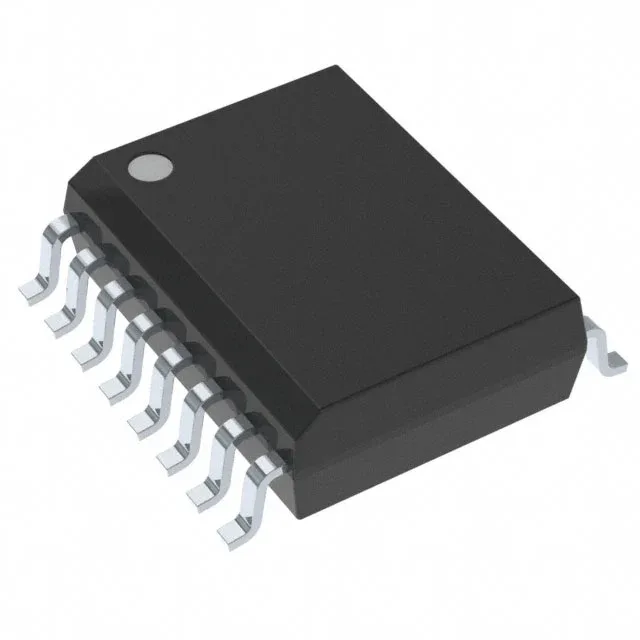
The ISO6740FDWR comes in a 16-pin SOIC with 7.50 mm body width — the wide-body variant, not the narrow 3.9 mm SOIC. That wider package gives 8 mm creepage between input and output sides, which is what you need to maintain the 5000 Vrms isolation rating in your end equipment. For the rework bench: the SOIC-16 wide body is a straightforward hot-air removal at 340°C with a 5 mm nozzle, no underfill to worry about. The wide body has more thermal mass than a narrow SOIC, so give the preheat an extra 10 seconds before lifting the part — will it survive the hot air? Yes, easily, as long as you don't cook it past 260°C peak at the joint.
The part is ROHS3 compliant. If you need a dual-source option for production resilience, the ISO6742FDWR is the same series with a 2/2 input/output split — functionally similar but with two channels reversed, so check your direction requirements before substituting.