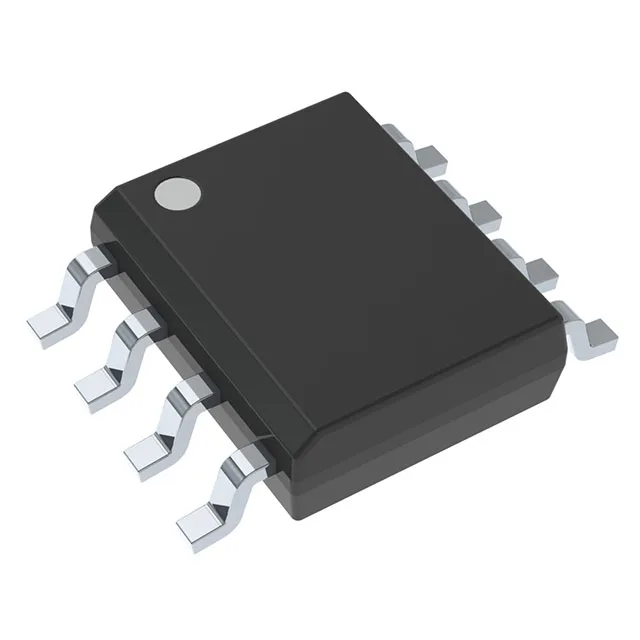
Dual-channel capacitive isolator for CAN, RS-485, and SPI buses
It uses capacitive coupling technology to provide galvanic isolation up to 3000 Vrms across a 1/1 input-side/side-2 channel configuration.
The 50 Mbps data rate covers the full-speed range of CAN FD (up to 8 Mbps), RS-485 at several Mbps, and SPI clock rates up to 50 MHz. Propagation delay is a max of 18 ns in both directions, with pulse-width distortion held to 7 ns — tight enough to keep bit timing margins intact on a 1 Mbps CAN FD bus.
Supply flexibility and 1.8 V logic compatibility
No level shifter needed between domains — the isolator handles the translation internally.
Functional Safety (FuSa) series — what it means
The ISO672x series is designated Functional Safety (FuSa), indicating the device is developed with safety-oriented design processes and documentation. While the evidence does not specify a particular SIL rating, the FuSa series classification means the part is intended for systems requiring systematic failure analysis and diagnostic coverage, such as industrial safety relays, servo drives, and automotive functional-safety domains.
For dual-sourcing resilience, the ISO6742DWR (4-channel, 5000 Vrms) is a higher-isolation sibling but not a pin-compatible drop-in — the channel count and package differ.