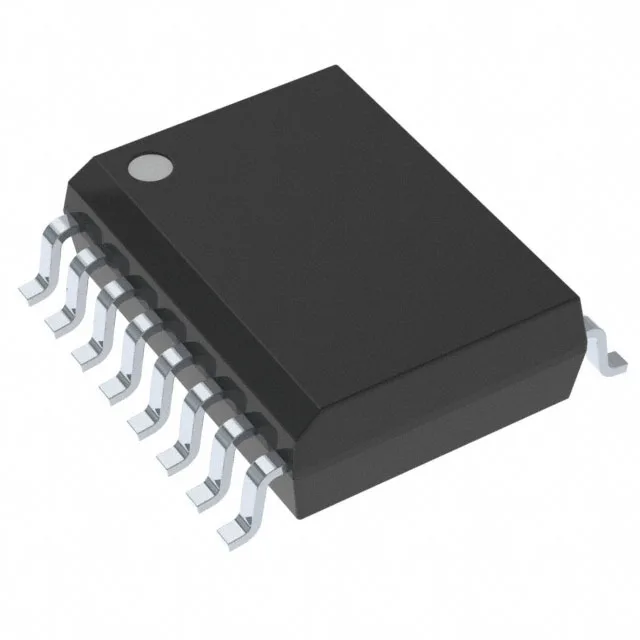
The ISO3082DWR from Texas Instruments is an isolated RS-485/RS-422 transceiver rated for 200 kbps, delivering 2.5 kVRMS of galvanic isolation between the logic interface and the differential bus. Packaged in a wide-body 16-SOIC, it carries two drivers and two receivers (2/2) for half-duplex operation, so a single device can both transmit and receive on a multi-drop RS-485 segment while the host side stays electrically separated from the field wiring. The isolation barrier is the core reason to choose this over a plain RS-485 part: in industrial settings the bus often runs meters between cabinets, picking up ground offsets, induced noise, and transient surges that can destroy a non-isolated driver or corrupt its data. Splitting the supply rails — 3.15V-5.5V on one side and 4.5V-5.5V on the other — lets the logic interface ride the controller's rail while the bus side runs a clean 5V, and the 30 mV receiver hysteresis keeps the receiver from chattering on idle or lightly loaded lines.
With an operating range of -40°C to +85°C and a wide SOIC body that provides proper isolation creepage, the ISO3082DWR suits PLC I/O, VFD communication ports, sensor networks, and building-automation gateways where data integrity across a noisy, ground-separated field bus is non-negotiable. At 200 kbps this is a moderate-speed device — ideal for long runs and harsh environments where you trade raw bandwidth for robustness. When you design it in, budget for an isolated bias supply on the bus side and respect the recommended PCB clearance under the wide SOIC footprint. If you need higher data rates or four-wire full-duplex operation, look elsewhere in the ISO308x family; for a hardened half-duplex RS-485 link at 200 kbps with true galvanic isolation, the ISO3082DWR is a dependable, widely stocked choice.