Precision signal conditioning for extreme environments
The INA333SHKQ is a single-channel instrumentation amplifier from Texas Instruments, designed for precision sensor signal conditioning where the environment pushes beyond standard industrial limits. Its key differentiator is the -55°C to 210°C operating temperature range, making it a fit for downhole drilling, aerospace engine monitoring, or any sealed high-temperature assembly where a standard op-amp would drift or fail. The rail-to-rail output stage allows the amplifier to swing close to the supply rails, preserving dynamic range in low-voltage systems. With a 150 kHz bandwidth and 0.16 V/µs slew rate, it handles slow-moving signals from thermocouples, strain gauges, or bridge sensors without aliasing or phase lag.
Parametric profile for BOM fit
The 10 µV input offset voltage (max) and 70 pA input bias current mean the INA333SHKQ can resolve microvolt-level signals from a high-impedance source without external trimming. For a load cell or RTD bridge, this reduces the need for a separate calibration step on the production line.
Package and sourcing posture
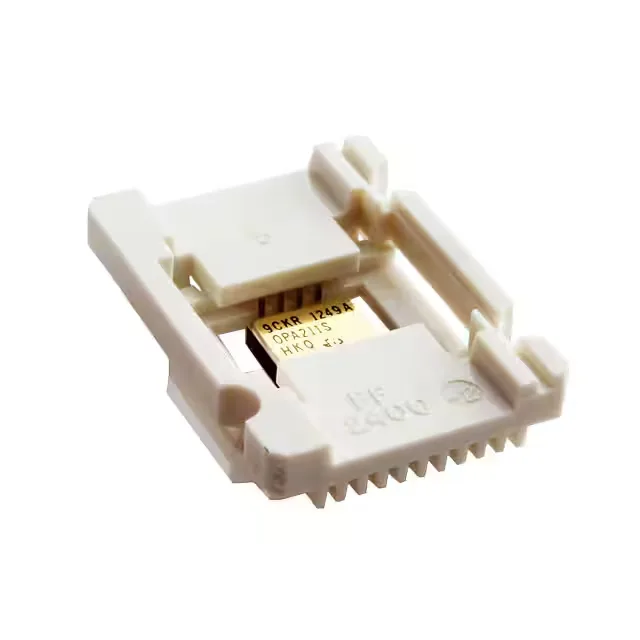
The INA333SHKQ is supplied in an 8-CFP (Ceramic Flat Package) — a hermetic ceramic package with a 0.220-inch body width, designed for high-reliability applications where moisture resistance and thermal cycling endurance are critical. The surface-mount footprint matches standard SOIC-8 land patterns, but the ceramic body requires a reflow profile that respects the higher mass and lower CTE mismatch risk.