Why the zero-drift topology matters for a 5 µV offset
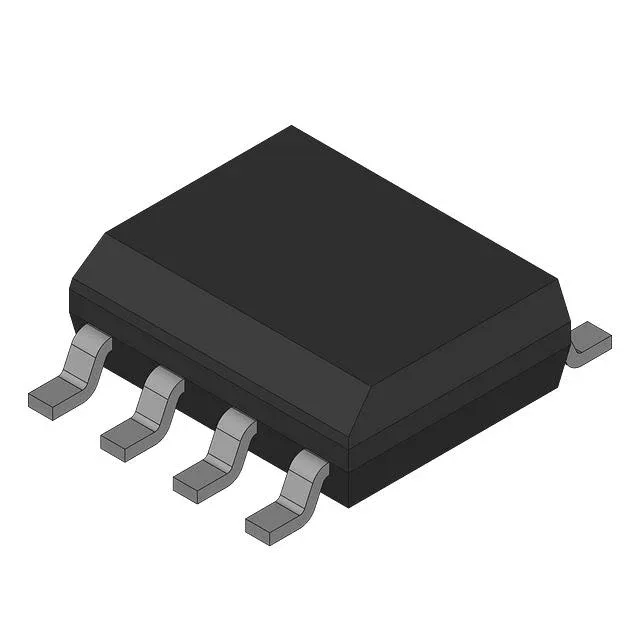
The INA240A3EDRQ1 is a Texas Instruments automotive-grade current sense amplifier built on a zero-drift architecture. That topology is what holds the input offset voltage to 5 µV — a figure that keeps the measurement error negligible even when the shunt resistor drops only a few millivolts at low load current. The part is qualified to AEC-Q100, so it carries the temperature and reliability screening expected for under-hood and chassis-domain electronics.
400 kHz bandwidth — what it resolves and what it doesn't
The -3 dB bandwidth is 400 kHz, with a slew rate of 2 V/µs. That is fast enough to capture the current waveform in a motor-drive PWM cycle at typical carrier frequencies (4–20 kHz) and to track solenoid or relay coil current. It will not resolve the sub-microsecond edges of a GaN or SiC switching stage — for those you need a wider-bandwidth current sense amp. Supply current is 1.8 mA, which is moderate for a precision sense amp.
No special pad geometry or thermal vias are needed — the sense resistor and the amplifier sit on the same copper pour for Kelvin sensing.
The BOM line can be committed without a phase-out risk, and standard lead times apply through the distribution channel.