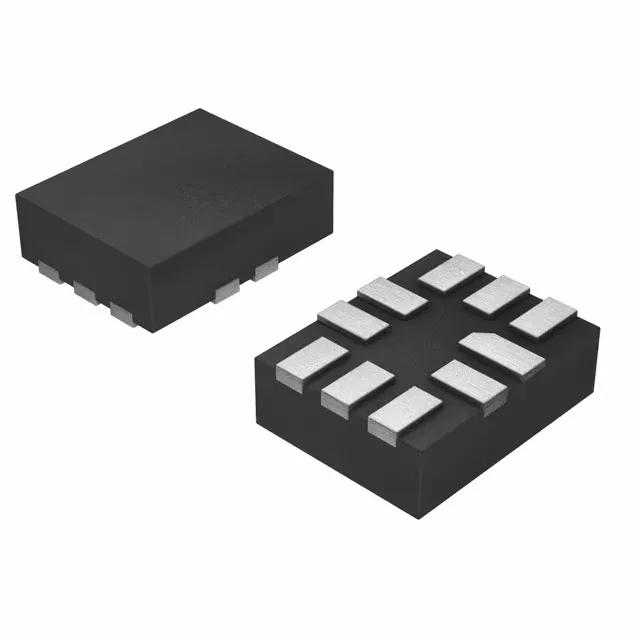
Texas Instruments INA213CIRSWT — Analog & Data Acquisition

TI INA213CIRSWT Current Sense Amplifier, 80kHz, 10-UQFN

MPNINA213CIRSWT
End of Life

Texas Instruments INA213CIRSWT, Current Sense Amplifier, 1 Circuit, 80 kHz Gain Bandwidth, 0.4 V/µs Slew Rate, 5 µV Input Offset, 65 µA Supply, 2.7 V to 26 V, -40 to 125°C, 10-UQFN.

$1.88Ref. price · indicative, final on quote
Packaging10-UFQFN
RoHSROHS3 Compliant
Independent supplier — new & surplus stockAuthenticity-screened · ESD-safe packingListing updated Aug 2026

Specifications

INA213CIRSWT specifications
ParameterValue
MountingSurface Mount
Amplifier typeCurrent Sense
Voltage - input offset5 µV
Voltage - supply span2.7 V
Current - supply65µA
Current - input bias28 µA
Operating temperature-40°C ~ 125°C
Gain bandwidth product80 kHz
PackageTape & Reel (TR); Cut Tape (CT)
Slew rate0.4V/µs
Case10-UFQFN
Number of circuits1

Product details

Current-sense amp for precision shunt monitoring

The 5 µV typical input offset voltage and 65 µA supply current are specified in the datasheet. The 28 µA input bias current is typical for a bipolar-input current-sense amp.

Package and footprint: 10-UQFN 1.8x1.4 mm

The INA213CIRSWT comes in a 10-UQFN package measuring 1.8 mm x 1.4 mm.

It is ROHS3 compliant, with no exemptions for lead or other restricted substances.

Frequently asked questions

What is the typical application of INA213CIRSWT?

The INA213CIRSWT is a current-sense amplifier used to measure load current by amplifying the voltage drop across a shunt resistor. Typical applications include overcurrent protection, battery monitoring, motor current sensing, and power-supply load monitoring in industrial and automotive systems. The 80 kHz bandwidth and 0.4 V/µs slew rate are suited for DC and low-frequency AC current measurement, not high-speed transient capture.

Is INA213CIRSWT RoHS compliant?

Yes, the INA213CIRSWT is ROHS3 compliant, meaning it contains no restricted substances above the allowed thresholds. No lead, mercury, cadmium, or other RoHS-listed materials are present in concentrations that exceed the exemption limits.