Common-mode headroom and the shunt voltage
The INA199C2RSWT senses current by measuring the differential voltage across a shunt resistor, but the signal the amplifier sees rides on the bus voltage. With a -0.1 V to 26 V input common-mode range, it handles a 12 V automotive rail, a 24 V industrial bus, or a 5 V logic rail without external level translation — the shunt can sit on either side of the load. The ±1 % accuracy figure is the total output error over the full temperature range, not just at 25 °C.
Footprint and board integration
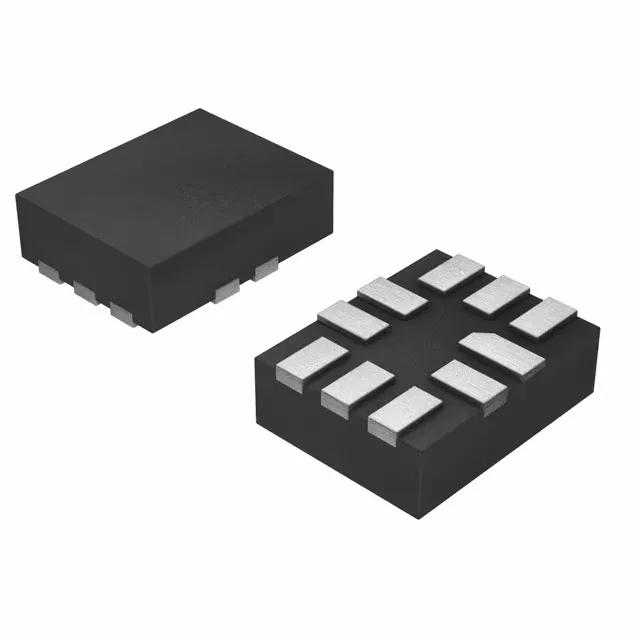
The 10-UQFN package measures 1.8 mm x 1.4 mm with a 0.40 mm pitch — the land pattern fits under a microcontroller or between passives on a dense mixed-signal board. The supplier device package is the same 10-UQFN (1.8x1.4), so the stencil and footprint match the datasheet recommendation. Surface-mount assembly on standard FR-4 with a lead-free reflow profile is straightforward; the package is MSL-1 per the TI shipping label, so no moisture-sensitive bake is required before reflow.
Active lifecycle and compliance posture
ROHS3 Compliant certification covers the full substance restriction list without exemptions, so the part meets EU RoHS and UK REACH requirements without a compliance gap.