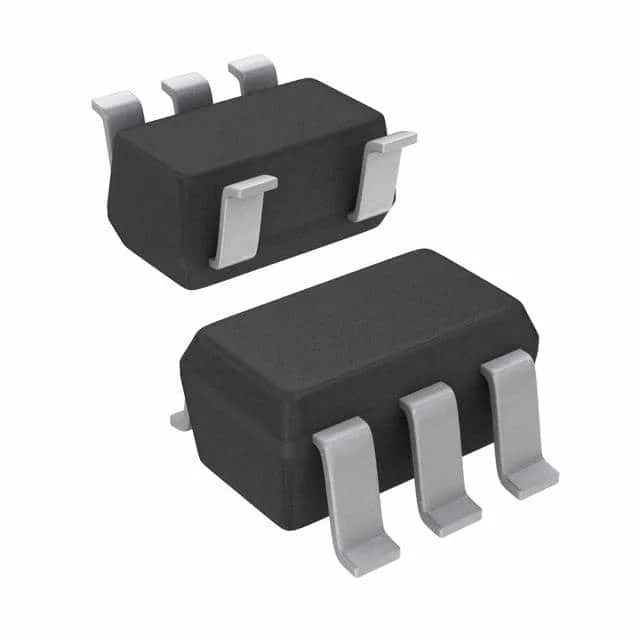
Texas Instruments INA180A4IDBVR — Analog & Data Acquisition

INA180A4IDBVR Current Sense Amplifier, 350 kHz, SOT-23-5

MPNINA180A4IDBVR
Active

Texas Instruments INA180A4IDBVR, current-sense amplifier, 350 kHz bandwidth, 2 V/µs slew rate, rail-to-rail output, 260 µA supply, SOT-23-5 package, -40°C to 125°C.

$0.5100Ref. price · indicative, final on quote
Independent supplier — new & surplus stockAuthenticity-screened · ESD-safe packingListing updated Jul 2026

Specifications

INA180A4IDBVR specifications
ParameterValue
Output typeRail-to-Rail
MountingSurface Mount
Amplifier typeCurrent Sense
Voltage - input offset100 µV
Voltage - supply span5.5 V
Current - supply260µA
Current - input bias80 µA
Operating temperature-40°C~125°C
-3db bandwidth350 kHz
PackageTape & Reel (TR); Cut Tape (CT)
Slew rate2V/µs
CaseSC-74A, SOT-753
Number of circuits1

Product details

Current-sense amplifier in SOT-23-5

The INA180A4IDBVR: It monitors current via a shunt resistor and outputs a voltage proportional to the sensed current, with a rail-to-rail output stage.

The -3 dB bandwidth of 350 kHz sets the upper limit for the fastest current transient the amplifier can track. For a typical DC/DC converter switching at 500 kHz, the INA180A4IDBVR will capture the average current but not the switching ripple. The 2 V/µs slew rate supports the output swing needed for fast load-step response without slew-induced distortion.

260 µA supply current for always-on sensing

Quiescent supply current is 260 µA. In a battery-powered system where the sense amplifier runs continuously, this current directly impacts standby time.

Frequently asked questions

What is the exact gain of INA180A4IDBVR?

The gain is not listed in the available specifications. The part is a fixed-gain current-sense amplifier; the gain value is defined by the device variant suffix. Refer to the TI datasheet for the exact gain figure.

Can INA180A4IDBVR measure high-side current?

Yes, the INA180 is a current-sense amplifier that can measure current on the high side (between the supply and the load) or the low side (between the load and ground). The common-mode input range extends from -0.1 V to 26 V, covering typical high-side sensing in 5 V and 12 V systems.