What this precision instrumentation amp does
Texas Instruments INA128UA is a precision instrumentation amplifier in an 8-SOIC package, designed for accurate differential signal conditioning in bridge sensors, medical instrumentation, and industrial data-acquisition front-ends. Its 25 µV input offset voltage and 2 nA input bias current let it resolve microvolt-level signals without external trimming, while the 4 V/µs slew rate and 1.3 MHz bandwidth handle fast transient edges from PWM sensor outputs or multiplexed channels.
Operating range and supply considerations
The amplifier runs from a single supply as low as 4.5 V up to 36 V total span, making it usable on common 5 V or ±15 V rails. Quiescent current is 700 µA, which keeps the thermal budget manageable in densely populated boards.
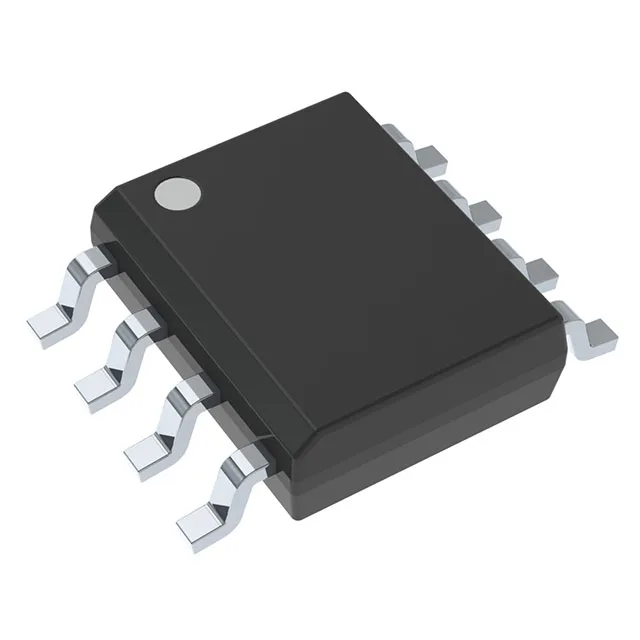
Housed in an 8-SOIC (0.154" body width), the INA128UA is a straightforward hand-solder or reflow part. The SOIC-8 footprint is low-thermal-mass — it reflows cleanly with a standard 260°C peak profile and is easy to remove with hot air without lifting pads.
The INA128UA is Active with no announced end-of-life, and it is ROHS3 Compliant. For long-term BOM planning, there is no immediate obsolescence risk.