LVDS transceiver for high-speed serial links
It is designed for point-to-point or multi-drop serial data links requiring signal integrity over twisted-pair or PCB traces at rates up to 400 Mbps.
400 Mbps signaling with full-duplex topology
The 400 Mbps data rate per channel supports high-speed interfaces such as backplane clock distribution, video data links, or serial peripheral expansion. Full-duplex operation means each driver/receiver pair supports simultaneous transmit and receive on separate differential pairs, which halves the cable count compared to a half-duplex design using the same number of channels. With two independent channels, the device can handle two separate full-duplex links or one link with redundant paths.
Obsolete — sourcing and replacement planning
The manufacturer has discontinued production and there is no official last-time-buy window currently open.
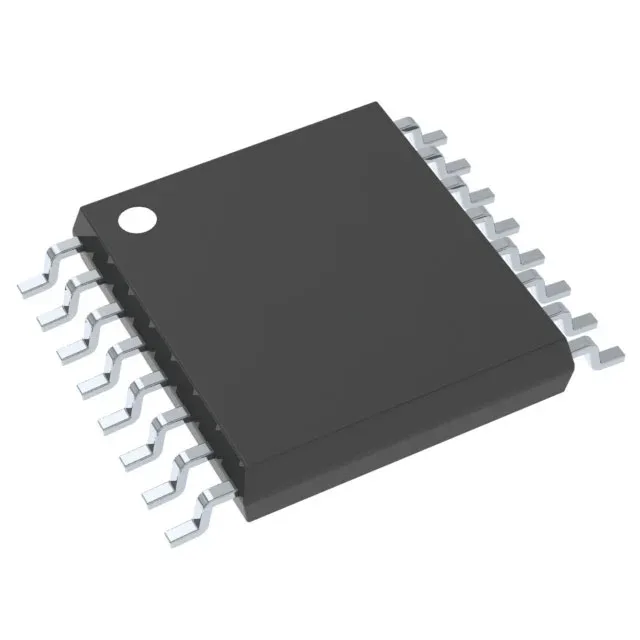
Housed in a 16-TSSOP package (4.40 mm width, 0.173" pitch), the DS90LV049HMTX uses a standard surface-mount footprint compatible with many LVDS transceivers in the same package. The supply voltage range of 3V to 3.6V allows direct connection to a 3.3V rail with margin for ripple.