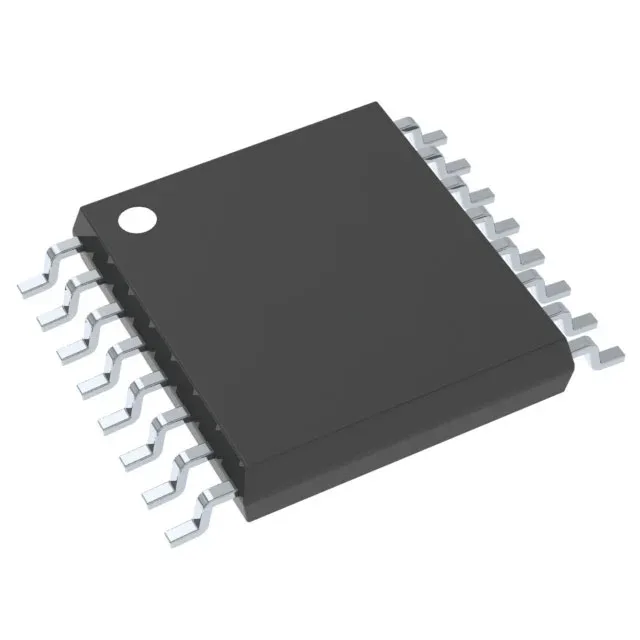
It delivers 400 Mbps per channel, translating a single-ended TTL/CMOS input into a differential LVDS output that meets the TIA/EIA-644 standard.
At 400 Mbps the driver maintains a 1.2 ns typical differential rise time, which keeps the signal-integrity margin healthy over a few meters of twisted-pair or ribbon cable with proper termination. The LVDS swing (~350 mV) reduces radiated emissions compared to single-ended CMOS drivers at the same frequency. For a 100 Ω differential pair, the output current is sized to deliver the standard 3.5 mA swing, so the receiver sees a clean differential eye even with moderate cable loss.
A buyer evaluating a new design should look at current-production LVDS quad drivers in the same 16-TSSOP footprint, such as the DS90LV047A series variants still listed as active, but verify pin compatibility against the datasheet.
Package and footprint notes for layout
The surface-mount footprint follows the standard TSSOP-16 land pattern; no exposed pad or thermal slug is present, so thermal dissipation relies on the copper pour and via stitching under the package. The 0.65 mm pin pitch is compatible with common LVDS quad-driver footprints from other vendors, which matters when qualifying a second source for the BOM.