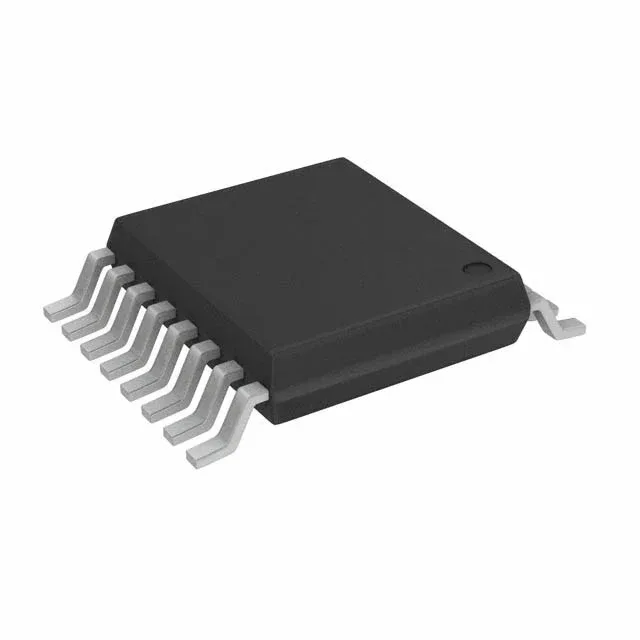
The Texas Instruments DS90LV032ATMTC is a quad-channel LVDS receiver that converts differential LVDS signals to CMOS/TTL levels.
NRND – plan the procurement window
That means TI is not actively developing it for new sockets, and the supply channel is narrowing. Existing production runs can still be supported through independent distribution, but a last-time-buy notice could appear. For new BOMs, evaluate the pin-compatible DS90LV032A (active) as a direct drop-in – same footprint, same supply, same 400 Mbps rate. If you have an established design, secure a buffer lot now to cover the next two years of builds.
Each of the four receivers handles 400 Mbps, so the aggregate throughput across the chip is 1.6 Gbps. That 400 Mbps per lane is the raw bit rate – no encoding overhead baked in. For a 24-bit LVDS display interface at 60 Hz, one receiver channel can carry two data pairs with margin.
16-TSSOP – board-level fit
It mounts on the top or bottom layer with standard reflow profiles – no exotic stencil. Keep the differential traces short and matched within 5 mm to preserve signal integrity at 400 Mbps.