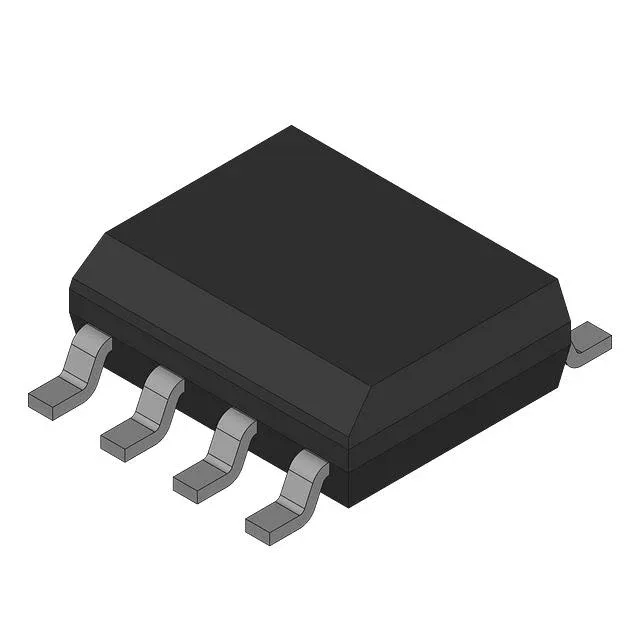
What this LVDS receiver does on the board
The DS90LV028ATM is a dual LVDS receiver — it takes a differential LVDS signal pair and converts it to a single-ended CMOS output. Two independent channels in one 8-SOIC package, with the receiver inputs terminated on-die for 100 Ω differential lines. Data rate ceiling is 400 Mbps per channel, which covers the common LVDS link speeds for serializer-deserializer backplanes, camera interfaces, and clock distribution on industrial control boards.
That means it's still available for existing production runs but TI has stopped actively supporting it for new board spins. The part is RoHS non-compliant (lead-bearing solder finish), which is a flag for any RoHS-mandated assembly line. If your reflow profile or end-market requires RoHS, this part needs an exemption or a Pb-free alternative. For existing BOMs already qualified with this receiver, the NRND status doesn't trigger an immediate last-time-buy — but it does mean the supply window is finite.
The tube delivery means it's not tape-and-reel; if your pick-and-place line expects reeled parts, factor in tube-to-reel transfer or order the alternate reel-pack variant.