What this LVDS transceiver does — and the one spec that decides fit
It handles serial data at 100 Mbps, which is the rating that determines whether it works for your link budget — a camera serial interface at that rate is fine, but a 200 Mbps display link is not.
Industrial temperature range — where it survives
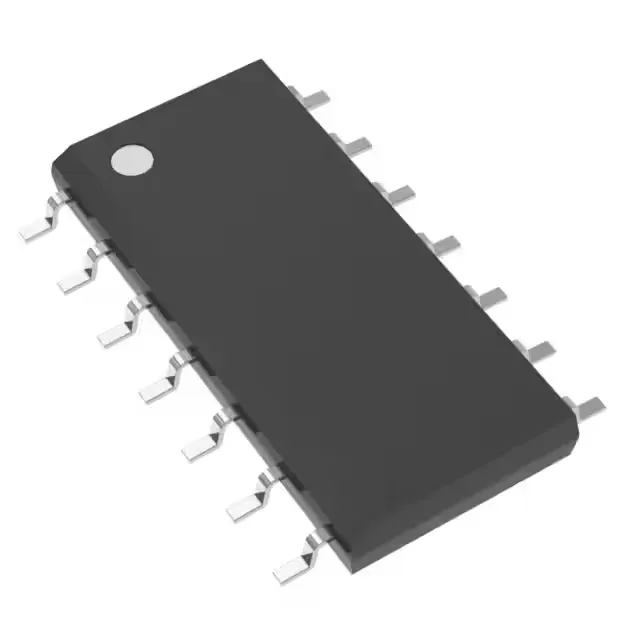
The 14-SOIC footprint is hand-solderable, so it's also a practical choice for a prototype or a small-batch panel retrofit where you want to avoid a hot-air rework station.
The DS90LV019TM carries a Not Recommended for New Designs (NRND) status. That means TI is not actively promoting it for new projects, and the long-term supply window is finite. But if you are starting a new design, this is the signal to look at the pin-compatible alternatives in the same family.
Replacement planning — what to move to
For a new design, the natural move is to a current-production LVDS transceiver in the same 14-SOIC footprint. TI's DS90LV019 family has several active variants that share the pinout and supply range, so the board layout does not need to change. The key difference to check is the data rate — some siblings offer 200 Mbps or 400 Mbps, which gives headroom if your next revision needs more bandwidth.