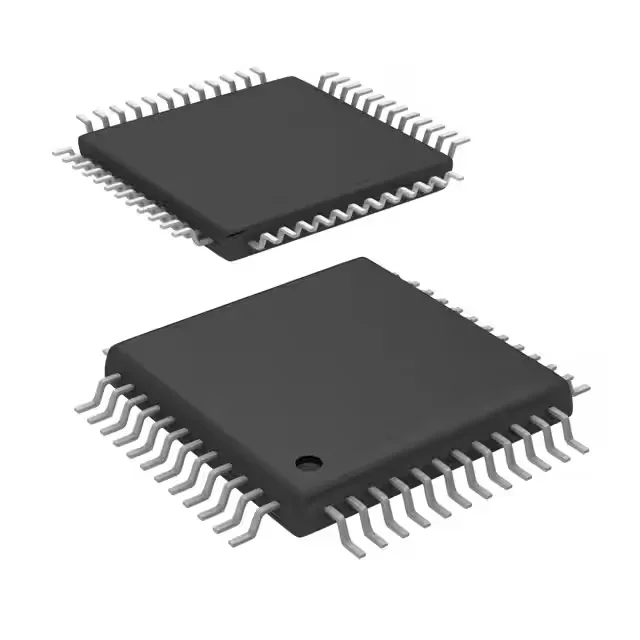
Signal-conditioning repeater for high-speed serial links
The Texas Instruments DS90LV004TVS is a 4-channel LVDS buffer and repeater that accepts CML, LVDS, or LVPECL inputs and retransmits them as clean LVDS outputs. It is designed to extend the reach of high-speed serial links on backplanes, cables, and PCB traces where signal integrity degrades over distance. Each channel supports data rates up to 1.5 Gbps, with a propagation delay of 2.0 ns and input capacitance of 3.5 pF. A key feature is the programmable output pre-emphasis, which compensates for high-frequency losses in the interconnect, allowing longer trace lengths or cable runs without a separate equaliser. The device operates from a single 3.15 V to 3.45 V supply and draws 117 mA typical.
NRND — last-time-buy sourcing reality
This means Texas Instruments will continue to manufacture and supply the part for existing designs for a defined period, but it is not intended for new product development. The official last-time-buy window has not been closed, but the clock is running. For any active BOM line using this part, the procurement strategy should secure sufficient inventory to cover remaining production needs before the LTB deadline passes. There is no official replacement listed in the available records. If a pin-compatible drop-in is required for a new design, a review of TI's current LVDS repeater portfolio is necessary, but no direct successor part number is confirmed here.
What the 1.5 Gbps data rate and pre-emphasis mean for your link budget
The 1.5 Gbps per-channel data rate places this part in the class of high-speed serial repeaters used for protocols like LVDS-based video links, gigabit Ethernet-over-copper, or proprietary backplane interfaces. At this speed, a 2.0 ns propagation delay is tight enough to keep the timing budget intact across a few stages of buffering without violating setup-and-hold windows. The output pre-emphasis is the feature that matters most when the trace length exceeds about 12 inches on standard FR4. Without it, the eye diagram closes due to skin-effect and dielectric losses. With pre-emphasis enabled, the driver boosts the first bit after a transition, effectively pre-distorting the signal so the receiver sees a cleaner eye. This can extend reach by 50–100% over a plain buffer, depending on the loss profile.