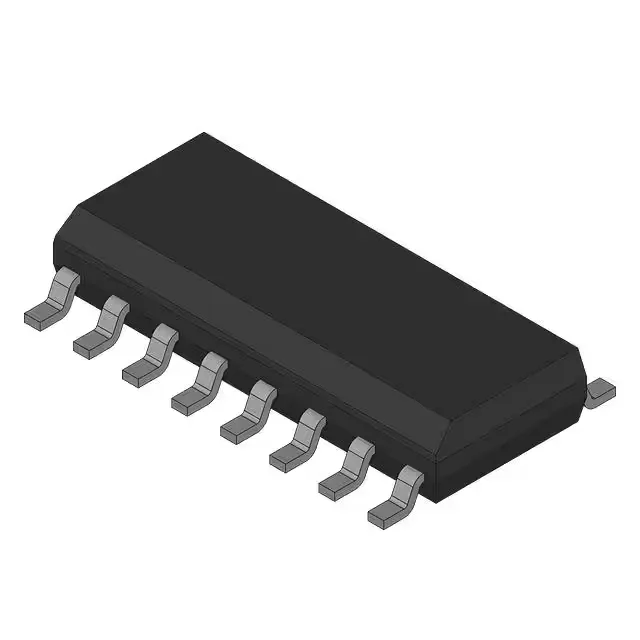
Texas Instruments DS90C032TMX — Discrete Semiconductors

Texas Instruments DS90C032TMX LVDS Receiver, 4-Ch, 5V

MPNDS90C032TMX
End of Life

Texas Instruments DS90C032TMX LVDS receiver, quad-channel, 4.5-5.5 V supply, -40 to +85 °C, 16-SOIC (0.154", 3.90 mm width), surface mount, bulk package.

$2.49Ref. price · indicative, final on quote
Packaging16-SOIC (0.154", 3.90mm Width)
RoHSRoHS non-compliant
Sourced new & surplus through independent channelsAuthenticity-screened · ESD-safe packingListing updated Aug 2026

Specifications

DS90C032TMX specifications
ParameterValue
TypeReceiver
MountingSurface Mount
Voltage4.5V ~ 5.5V
ProtocolLVDS
Operating temperature-40°C ~ 85°C
PackageBulk
Case16-SOIC (0.154\", 3.90mm Width)
Number of drivers (Receivers)0/4

Product details

LVDS quad receiver — 5V supply, four differential inputs

The DS90C032TMX is a four-channel LVDS line receiver from Texas Instruments, designed to convert differential LVDS signals back to single-ended CMOS levels on the receiving end of a high-speed serial link. It handles four independent receiver channels with no drivers on-chip — pure receive function for point-to-point or multidrop LVDS buses.

Package and supply — 16-SOIC narrow body, 5 V only

The supplier device package is listed as 16-SOIC, meaning no exposed pad; thermal dissipation relies on the leadframe and board copper. Because this is a 5 V-only receiver, the input common-mode range of LVDS (typically 0 V to 2.4 V with a 1.2 V offset) must stay within the receiver's specified range — the datasheet's common-mode tolerance is the key number for determining whether a particular cable length or ground offset is viable. The 4.5 V minimum supply means a 5 V rail with ±10 % tolerance still keeps the part in spec.

Frequently asked questions

Can DS90C032TMX replace SN65HVD233MDREP?

No — the SN65HVD233MDREP is a CAN transceiver (single driver, single receiver, half-duplex, 3.3 V supply) while the DS90C032TMX is a 5 V LVDS quad receiver. They use different protocols, different voltage levels, and different bus topologies. They are not drop-in replacements and serve entirely different signal-chain roles.