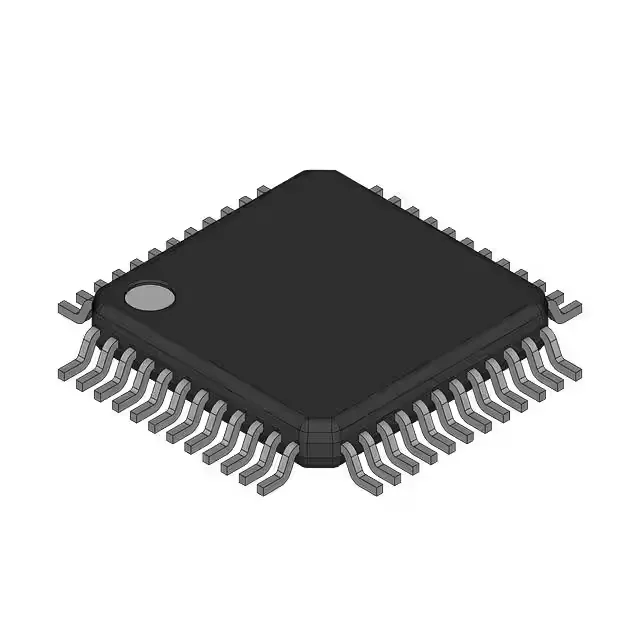
4-channel LVDS reDriver for multi-link backplanes
The Texas Instruments DS15BR400TVS is a 4-channel buffer/reDriver that accepts CML, LVDS, or LVPECL inputs and re-transmits them as LVDS outputs at up to 2 Gbps per channel. With a 1.0 ns propagation delay and integrated output pre-emphasis, it compensates for trace and cable losses on long backplane or cable runs — the pre-emphasis boosts the high-frequency content of the output edge, extending the reachable distance before the eye diagram closes.
Signal-conditioning and timing budget for high-speed links
Each of the four channels independently buffers and reshapes the input signal. The 1.0 ns delay adds to the total link latency — for a 2 Gbps NRZ signal (500 ps unit interval), this delay is two bit periods, so the reDriver must be factored into the system timing budget, especially in source-synchronous or forwarded-clock architectures. The output pre-emphasis is a fixed boost applied to the first transition after a steady-state level — it does not adapt to channel length, so the board designer should set the pre-emphasis level (via the device's control pins, per the datasheet) to match the estimated trace loss at 1 GHz (the Nyquist frequency for 2 Gbps). Input capacitance is 3 pF typical per channel, which loads the upstream driver's output — a driver specified for a 5 pF max load will see margin erosion when all four DS15BR400 inputs are connected in parallel, so the upstream fan-out must be checked.
Package, supply, and compliance for BOM integration
The part is listed as RoHS non-compliant, which means it contains lead (Pb) above the 0.1 % threshold — this is typical for many TI high-speed signal-conditioning parts that use leaded solder in the package to avoid tin whisker risk. The BOM must flag this for any RoHS-exempt or leaded-assembly line; it is not suitable for a pure RoHS-compliant production flow without an exemption.