The Texas Instruments DRV8860PW is a fully integrated low-side driver that packs eight NMOS open-drain outputs, each rated for 200 mA, into a 16-pin TSSOP package. It handles brushed DC motors and unipolar steppers, plus general-purpose inductive loads like relays, solenoids, and lamps. The SPI interface lets a host controller shift in data for all eight channels over three or four wires — no dedicated PWM timer pins needed on the MCU side. Supply and load voltage share the same 8 V to 38 V rail, so one unregulated supply powers both the logic and the output stage.
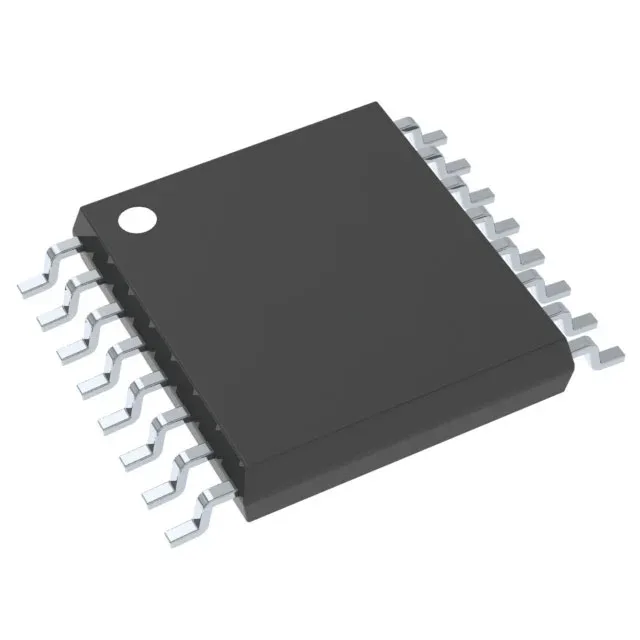
DRV8860PW Low-Side Driver IC, 8-Channel, SPI, 8-38V, 200mA
MPNDRV8860PW
End of Life
Texas Instruments DRV8860PW, Driver - Fully Integrated, Control and Power Stage, NMOS, Low Side (8), 200mA, 8V~38V, SPI, Surface Mount, 16-TSSOP, -40°C~150°C.
$4.25Ref. price · indicative, final on quote
Packaging16-TSSOP (0.173", 4.40mm Width)
RoHSROHS3 Compliant
Independent supplier — new & surplus stockAuthenticity-screened · ESD-safe packingListing updated Aug 2026
Specifications
| Parameter | Value |
|---|---|
| Mounting | Surface Mount |
| Motor type - AC, DC | Brushed DC |
| Motor type - stepper | Unipolar |
| Voltage - load | 8V ~ 38V |
| Supply voltage | 8V ~ 38V |
| Output current | 200mA |
| Interface | SPI |
| Operating temperature | -40°C ~ 150°C (TJ) |
| Package | Tube |
| Function | Driver - Fully Integrated, Control and Power Stage |
| Technology | NMOS |
| Applications | General Purpose |
| Case | 16-TSSOP (0.173\", 4.40mm Width) |
| Output configuration | Low Side (8) |
Product details
Frequently asked questions
What is the DRV8860PW alternative or equivalent part?
The closest functional peer is the DRV8811PWPR, which provides four half-bridge outputs rated for 1.9 A and supports bipolar steppers. The DRV8860PW offers eight low-side outputs at 200 mA for unipolar steppers and general-purpose loads — the choice depends on whether your load needs half-bridge drive or eight independent low-side switches.
How do I interface DRV8860PW with SPI?
The DRV8860PW uses a standard SPI interface: connect SCLK, SDI, and CS to the host MCU. Data shifted in on SDI controls the eight output states; the device does not have a data-out pin, so no MISO connection is needed. The SPI clock rate is not specified in this listing — refer to the datasheet for timing requirements.