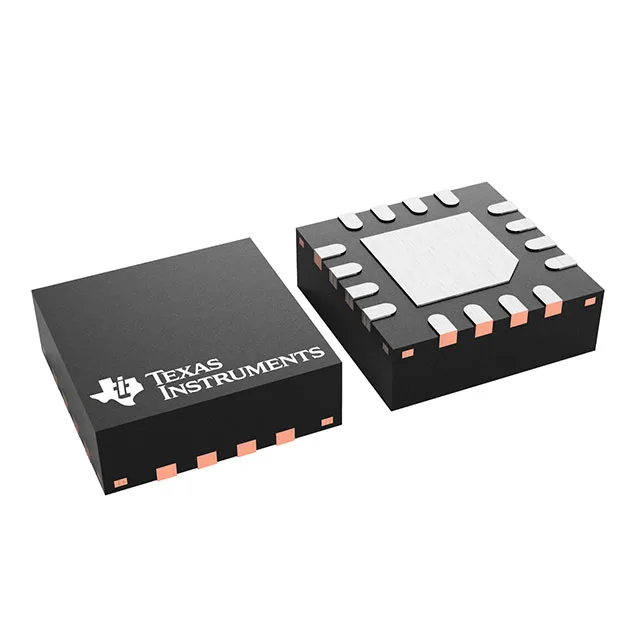
Texas Instruments DRV8411ARTER — Logic ICs

DRV8411ARTER Dual H-Bridge Motor Driver, 4 A, 1.5–11 V

MPNDRV8411ARTER
End of Life

Texas Instruments DRV8411ARTER, Driver - Fully Integrated, Control and Power Stage, Power MOSFET, PWM Interface, 4 A Output, 1.5 V ~ 11 V Supply/Load, 16-WFQFN Exposed Pad, -40°C ~ 125°C.

$2.26Ref. price · indicative, final on quote
Packaging16-WFQFN Exposed Pad
StockContact for availability
MOQ1 pcs
  • 100% new & originalTraceable channels only — no refurbs, no pulls, no remarked parts.
  • Date & lot codes on quoteStated per line before you commit; label photos on request.
  • MSL-compliant ESD packingMoisture-sealed bags with indicator cards; reels photo-verified.
  • PayPal buyer protectionPay by T/T, PayPal or Payoneer — card payments covered end to end.

Specifications

DRV8411ARTER Technical Specifications
ParameterValue
Mounting typeSurface Mount
Motor type - AC, DCBrushed DC
Motor type - stepperBipolar
Voltage - load1.5V ~ 11V
Voltage1.5V ~ 11V
Current - output4A
InterfacePWM
Operating temperature-40°C ~ 125°C (TA)
PackageTape & Reel (TR); Cut Tape (CT)
FunctionDriver - Fully Integrated, Control and Power Stage
TechnologyPower MOSFET
ApplicationsGeneral Purpose
Case16-WFQFN Exposed Pad
Output configurationHalf Bridge (4)

Product details

Dual H-bridge with 4 A per bridge — what it drives and where

The Texas Instruments DRV8411ARTER is a fully integrated dual H-bridge motor driver that packs four half-bridge outputs into a 3 mm × 3 mm QFN package. Each half-bridge can deliver up to 4 A continuous, making the part suitable for driving two brushed DC motors or one bipolar stepper motor from a single supply rail between 1.5 V and 11 V.

4 A output current — sizing the load and the thermal budget

The 4 A rating per bridge is the headline selection parameter. The 16-WQFN with exposed pad (3 mm × 3 mm) means the PCB copper area and via stitching under the pad are what actually carry the heat away — a layout with inadequate thermal relief will current-limit or thermally cycle before the silicon reaches its 125°C junction limit. For a stepper motor, the 4 A per winding lets you run NEMA 17 and smaller NEMA 23 frames at their rated current without an external current-sense resistor stage, since the DRV8411ARTER integrates the power stage.

The ROHS3 compliance also clears European and global regulatory requirements without an exemption expiry to watch.

PWM interface and integrated power stage — what it simplifies on the board

The driver accepts standard PWM signals on its interface, so any microcontroller with timer-generated PWM can control motor speed and direction directly — no additional DAC or serial interface needed. The integrated Power MOSFETs eliminate the need for external FETs and gate-drive circuitry, collapsing what would be a multi-IC solution into a single 16-pin QFN. For a two-axis brushed DC application (e.g., a pump and a fan, or dual-motor positioning stage), one DRV8411ARTER replaces two discrete H-bridge designs and their associated PCB area.

Frequently asked questions

What is the DRV8411ARTER maximum output current per bridge?

The DRV8411ARTER is rated for 4 A continuous output per bridge (each half-bridge pair forming one H-bridge). That 4 A is the continuous current the integrated Power MOSFETs can sustain within the package thermal limits when the exposed pad is properly soldered to a sufficient copper area.

Can DRV8411ARTER drive a stepper motor?

Yes. The DRV8411ARTER supports bipolar stepper motors. Its four half-bridge outputs can be configured as two full H-bridges to drive the two windings of a bipolar stepper, with each winding rated for the full 4 A continuous current.

Is DRV8411ARTER RoHS compliant?

Yes, the DRV8411ARTER is ROHS3 compliant, meeting the latest EU RoHS directive without exemptions.

Is DRV8411ARTER a direct replacement for DRV8412?

The evidence does not provide a direct cross-reference between DRV8411ARTER and DRV8412. Both are TI dual H-bridge drivers, but the DRV8411ARTER is a different device variant. Verify pin-compatibility and parametric differences from the respective datasheets before substituting.