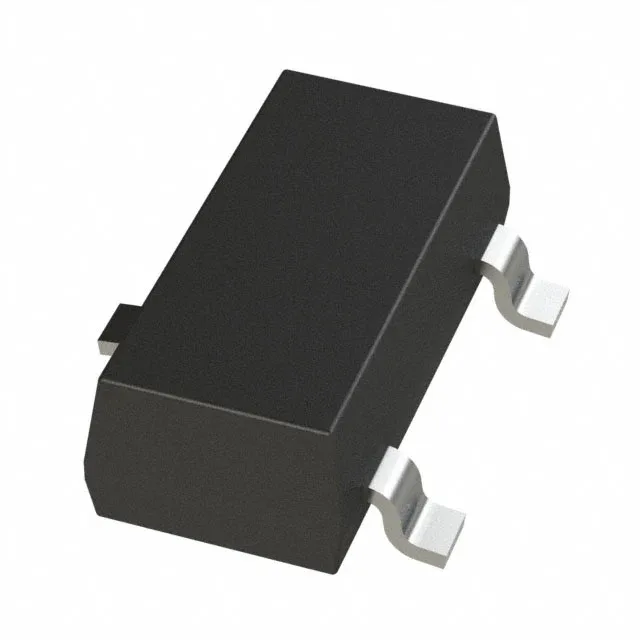
Texas Instruments DRV5021A2QDBZT — Sensors & Transducers

Texas Instruments DRV5021A2QDBZT Unipolar Switch, SOT-23

MPNDRV5021A2QDBZT
Active

Texas Instruments DRV5021A2QDBZT unipolar Hall-effect switch, SOT-23-3 package, south-pole sensitive, 2.5V supply, 12.5mT operate / 3.6mT release, open-drain output, -40°C to 125°C.

$0.37Ref. price · indicative, final on quote
Independent supplier — new & surplus stockAuthenticity-screened · ESD-safe packingListing updated Aug 2026

Specifications

DRV5021A2QDBZT specifications
ParameterValue
MountingSurface Mount
Operating temperature high-40°C to 125°C(TA)
Feature_listTemperature Compensated
Package_typeTape & Reel (TR); Cut Tape (CT)
PolarizationSouth Pole
Output signalOpen Drain
Test condition-40°C to 125°C
StatusActive
Timing_functionUnipolar Switch
Supply voltage2.5
Switching current0.0028
Output current max0.03
Sensing distance max12.5mT Trip, 3.6mT Release

Product details

Unipolar Hall switch with temperature-compensated thresholds

The DRV5021A2QDBZT is a unipolar Hall-effect switch from Texas Instruments, packaged in SOT-23-3 for surface-mount assembly. It responds only to a south-pole magnetic field, with a typical operate point of 12.5 mT and a release point of 3.6 mT — the 8.9 mT hysteresis prevents output chatter near the threshold. This matters for applications where the magnet's field strength drifts with temperature — the sensor's own drift is cancelled out.

2.5V supply, open-drain output, 30 mA sink

Supply voltage is fixed at 2.5 V, drawing 2.8 mA typical. The open-drain output sinks up to 30 mA — enough to drive a logic input or a small LED directly, but requiring a pull-up resistor to the host's logic rail. The output is active-low when a south pole exceeding 12.5 mT is present. In the unpowered or undetected state, the output goes high-impedance — the pull-up resistor defines the idle logic level.

Active lifecycle — no end-of-life concern

This is a current-production part suitable for both new designs and ongoing BOM replenishment.

Frequently asked questions

What does the temperature compensation feature do?

This avoids false triggers or missed detections when the ambient temperature changes.