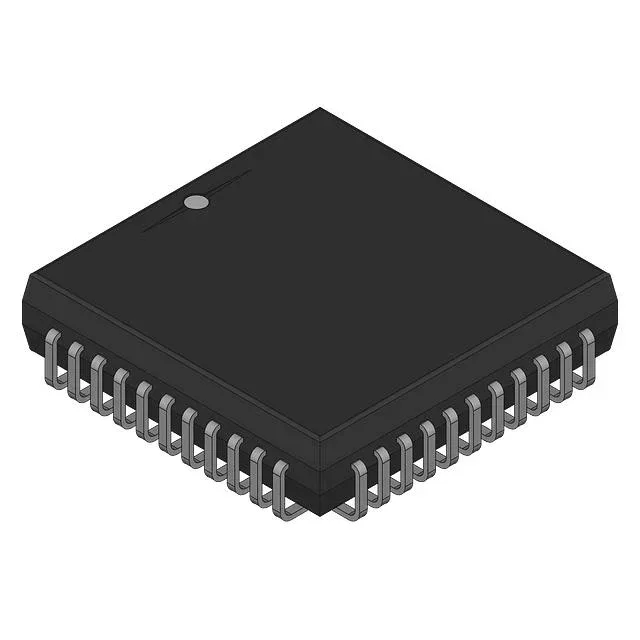
16-bit MCU with extended temperature range — active and available
The CR16MFS944V7 is a 16-bit Flash microcontroller from the CR16MFS9 series, built around National Semiconductor's CR16B RISC CPU core.
20 MHz CR16B core — what the clock speed means for your control loop
At 20 MHz the CR16B RISC core delivers deterministic instruction throughput for real-time tasks like CAN message handling and PWM updates. The external oscillator requirement means the system clock relies on a crystal or ceramic resonator — no internal RC, so the BOM adds a timing component but gains frequency accuracy across temperature. For a 16-bit machine at this speed, the flash wait-state penalty is minimal; the core can typically execute single-cycle instructions from the 0-wait region at 20 MHz, keeping interrupt latency predictable.
4.5 V supply — a fixed 5 V rail part
The supply voltage is specified at 4.5 V, which places this MCU on a nominal 5 V power rail. The 4.5 V minimum is tight enough that a 5 V rail with 10% tolerance (4.5 V min) just meets the spec; a 5 V rail with 5% tolerance (4.75 V min) gives margin. If your system runs on 3.3 V or battery voltages, this part requires a boost or separate 5 V regulator.
It also suits industrial applications like outdoor telecom base stations, factory-floor motor drives, and downhole instrumentation where the 125°C ceiling is a hard requirement.
Lifecycle status — active, no LTB risk
The active status also means the manufacturer continues to support it with datasheets, application notes, and toolchain updates.