8-bit COP8 core at 20 MHz — what the clock buys you
The COP8SDR9HVA8 runs a 20 MHz COP8 core, an 8-bit architecture with a single-cycle instruction set for the common operations. At 20 MHz the instruction throughput is roughly 5 MIPS — enough for a control loop sampling at 10 kHz with headroom for protocol handling. The 32 KB on-chip Flash (32K x 8) holds the firmware image; a moderate application with a UART bootloader, a PWM motor-control state machine, and a Microwire/Plus SPI sensor driver fits without external memory. The 1K x 8 SRAM is the tight constraint — the stack, interrupt context, and buffer pool must share this space, so the firmware should use a small RTOS or a super-loop scheduler.
Peripheral set and I/O count — what connects without glue
On-chip peripherals include POR (power-on reset), PWM, and WDT (watchdog timer). The POR eliminates a separate reset supervisor IC; the WDT guards against firmware lock-up in unattended operation. The PWM output drives a small DC motor or LED dimmer directly. Serial connectivity covers Microwire/Plus (a TI-specific SPI variant) and a UART/USART. The Microwire/Plus interface reads an external ADC or EEPROM; the UART provides a debug console or RS-485 link with an external transceiver. 37 I/O lines are available — enough for a 4x4 keypad matrix, 8 LED indicators, and a 16x2 character LCD in 4-bit mode.
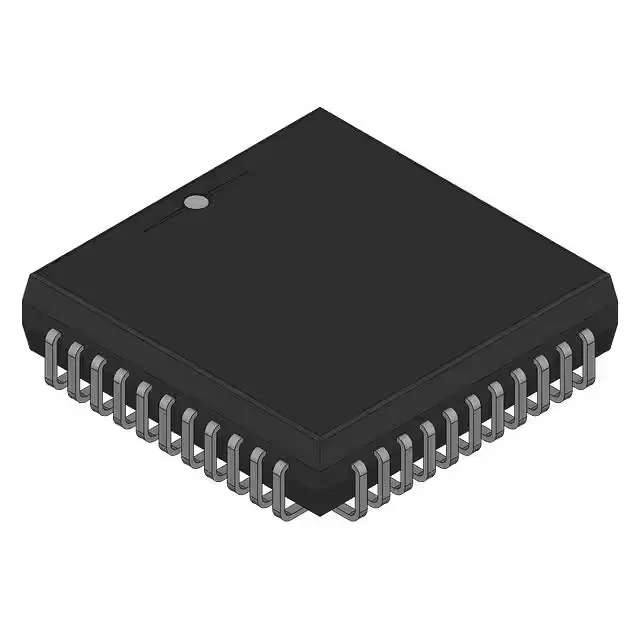
At 3.3 V the MCU interfaces directly with 3.3 V sensors and logic; at 5 V it drives 5 V peripherals without a level shifter. Industrial temperature grade (-40°C to 85°C) covers outdoor enclosures, factory-floor cabinets, and unheated storage. The 44-PLCC package (J-Lead, 16.59 x 16.59 mm body) requires a PLCC socket or a reflow profile that handles the J-bend leads — the footprint matches standard PLCC-44 land patterns.
Lifecycle and compliance — active, but RoHS non-compliant
For new designs that require RoHS compliance, a different COP8 family member or a migration to a newer 8-bit architecture (e.g., MSP430) should be evaluated.