Texas Instruments CDCLVP2104RHDT — Clock & Timing ICs

CDCLVP2104RHDT 2:8 LVPECL Fanout Buffer, 2 GHz – TI

MPNCDCLVP2104RHDT
End of Life

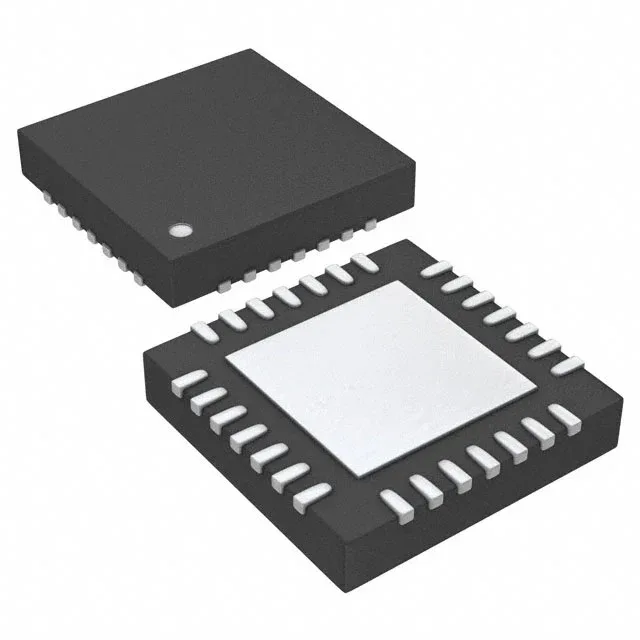
Texas Instruments CDCLVP2104RHDT, Fanout Buffer (Distribution), 2:8 LVPECL output, 2 GHz max frequency, 2.375V–3.6V supply, -40 to 85°C, 28-VFQFN Exposed Pad (5x5 mm).

$11.64Ref. price · indicative, final on quote
Packaging28-VFQFN Exposed Pad
RoHSROHS3 Compliant
Independent supplier — new & surplus stockAuthenticity-screened · ESD-safe packingListing updated Aug 2026

Specifications

CDCLVP2104RHDT specifications
ParameterValue
TypeFanout Buffer (Distribution)
MountingSurface Mount
Voltage2.375V ~ 3.6V
Frequency2 GHz
Operating temperature-40°C ~ 85°C
InputLVCMOS, LVDS, LVPECL, LVTTL
OutputLVPECL
PackageTape & Reel (TR); Cut Tape (CT)
Case28-VFQFN Exposed Pad
Number of circuits2
Ratio - Input:Output2:8
Differential - Input:OutputYes/Yes

Product details

2 GHz fanout buffer for high-speed clock distribution

The Texas Instruments CDCLVP2104RHDT is a 2:8 fanout buffer that accepts LVCMOS, LVDS, LVPECL, or LVTTL inputs and delivers eight LVPECL outputs at up to 2 GHz.

28-VQFN package — rework and layout notes

The 28-VFQFN with exposed pad (5x5 mm) is the same footprint used across the CDCLVP family.

The part is ROHS3 compliant. For current builds, there is no near-term obsolescence risk.

Frequently asked questions

Can CDCLVP2104RHDT work with a 3.3V supply?

Yes, the supply range is 2.375 V to 3.6 V, so a 3.3 V rail is well within the operating window. The same part also works from a 2.5 V rail without a separate regulator.

What are the alternatives to CDCLVP2104RHDT?

The CDCLVP1204RGTR is a 2:4 fanout buffer with the same input types, LVPECL outputs, and 2 GHz frequency ceiling. It saves board area and cost when only four outputs are needed. Both parts share the same supply range and temperature grade.

Can CDCLVP2104RHDT be used as a 1:8 fanout buffer?

The part has a 2:8 ratio, meaning two inputs and eight outputs. If only one input is used, the second input can be left unconnected or tied to a static level — the datasheet covers the unused input termination. It functions as a 1:8 buffer with one active input.