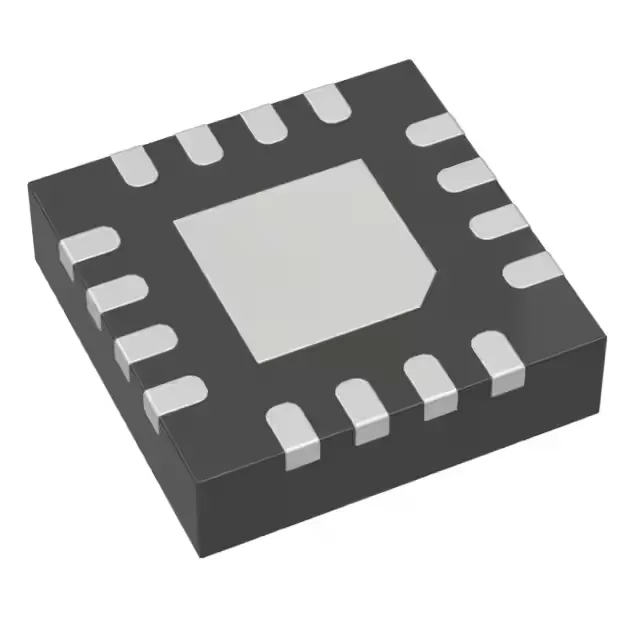
Texas Instruments CDCLVP2102RGTT — Clock & Timing ICs

CDCLVP2102RGTT Fanout Buffer, 2 GHz, 2:4 LVPECL, 16-QFN

MPNCDCLVP2102RGTT
End of Life

Texas Instruments CDCLVP2102RGTT, Fanout Buffer (Distribution), 2:4, 2 GHz max, LVPECL output, 16-VFQFN Exposed Pad, -40°C to 85°C.

$10.15Ref. price · indicative, final on quote
Packaging16-VFQFN Exposed Pad
StockContact for availability
MOQ1 pcs
  • 100% new & originalTraceable channels only — no refurbs, no pulls, no remarked parts.
  • Date & lot codes on quoteStated per line before you commit; label photos on request.
  • MSL-compliant ESD packingMoisture-sealed bags with indicator cards; reels photo-verified.
  • PayPal buyer protectionPay by T/T, PayPal or Payoneer — card payments covered end to end.

Specifications

CDCLVP2102RGTT Technical Specifications
ParameterValue
TypeFanout Buffer (Distribution)
Mounting typeSurface Mount
Voltage2.375V ~ 3.6V
Frequency2 GHz
Operating temperature-40°C ~ 85°C
InputLVCMOS, LVDS, LVPECL, LVTTL
OutputLVPECL
PackageTape & Reel (TR); Cut Tape (CT)
Case16-VFQFN Exposed Pad
Number of circuits2
Ratio - Input:Output2:4
Differential - Input:OutputYes/Yes

Product details

What this 2:4 LVPECL fanout buffer does

The Texas Instruments CDCLVP2102RGTT is a dual-circuit fanout buffer that distributes one or two clock inputs to up to four LVPECL outputs per channel. It accepts LVCMOS, LVDS, LVPECL, or LVTTL inputs and delivers differential LVPECL outputs at frequencies up to 2 GHz. Two independent 2:4 buffers share the same 16-VQFN package, saving board area compared to using two single-channel devices. The wide supply range of 2.375 V to 3.6 V lets it run from a 2.5 V or 3.3 V rail without an extra regulator.

2 GHz bandwidth — what it means for the timing tree

A 2 GHz maximum frequency covers high-speed serial links like 10 GbE, Fibre Channel, and PCIe Gen3 reference clocks. The differential LVPECL output swing keeps edge rates tight for long PCB traces. If your design runs at 156.25 MHz or 312.5 MHz, this buffer has margin to spare — the jitter contribution at those frequencies is well within the typical 0.2 ps RMS additive jitter budget for most networking ASICs. The 2:4 fanout ratio means one input can feed four downstream PLLs or transceivers without cascading multiple buffers.

Input flexibility and supply rails

The buffer accepts LVCMOS, LVDS, LVPECL, and LVTTL single-ended or differential inputs. That covers the common clock sources on a typical board: an LVDS oscillator, an LVPECL synthesizer, or a CMOS crystal oscillator. The supply voltage tolerance from 2.375 V to 3.6 V means you can drop it into a 2.5 V FPGA bank or a 3.3 V clock tree without a level shifter. Operating temperature from -40°C to 85°C suits outdoor telecom cabinets and industrial controllers.

Package and footprint notes

The 16-VFQFN with exposed pad (3 mm × 3 mm) requires a thermal via array under the pad for adequate heat dissipation when running both buffers at full speed. The exposed pad is electrically connected to the die substrate and should be tied to ground. The small footprint leaves room for decoupling capacitors close to the supply pins — place a 0.1 µF and 1 µF per supply pin within 2 mm for clean power at 2 GHz.

Lifecycle and sourcing

The CDCLVP2102RGTT is listed as Active with ROHS3 compliance. No official second-source alternate is listed, but the CDCLVP1204RGTR is a single-circuit 2:4 LVPECL buffer in the same package — useful as a drop-in for designs that only need one channel.

Frequently asked questions

Is CDCLVP2102RGTT compatible with LVDS input?

Yes. The input stage accepts LVDS, LVCMOS, LVPECL, and LVTTL levels. For LVDS, connect the positive and negative inputs directly; the internal biasing handles common-mode voltages within the specified range.

Is CDCLVP2102RGTT compatible with 3.3V systems?

Yes. The supply voltage range of 2.375 V to 3.6 V includes 3.3 V. The LVPECL output swing is referenced to the supply rail, so at 3.3 V the output levels are standard LVPECL.

What are the alternatives to CDCLVP2102RGTT?

The CDCLVP1204RGTR is a single-circuit 2:4 LVPECL buffer with the same 2 GHz bandwidth and input types, in the same 16-VQFN package. It is a functional alternative when only one fanout channel is needed.