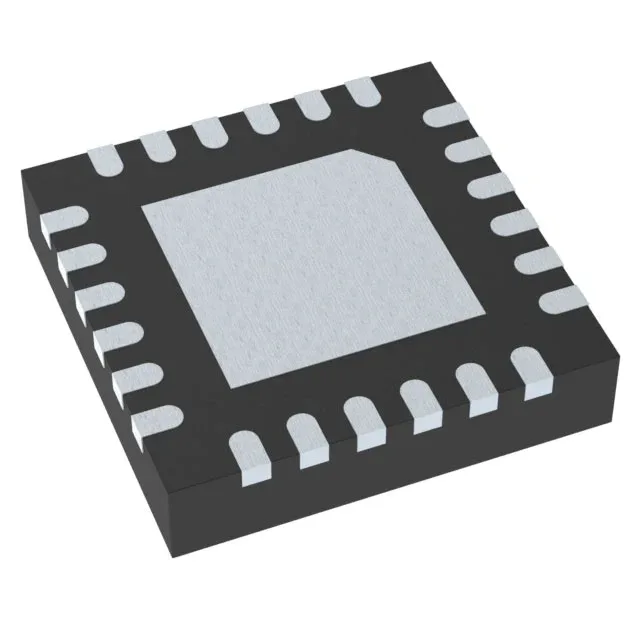
Texas Instruments CDCE421ARGET — Clock & Timing ICs

CDCE421ARGET Clock Generator – 1.2 GHz, LVDS/LVPECL, TI

MPNCDCE421ARGET
Active

Texas Instruments CDCE421ARGET, Clock Generator, PLL Yes, 1.2 GHz max, LVDS/LVPECL outputs, LVCMOS/Crystal input, 3V-3.6V supply, -40°C to 85°C, 24-VFQFN exposed pad.

$15.6800Ref. price · indicative, final on quote
Packaging24-VFQFN Exposed Pad
RoHSROHS3 Compliant
Independent supplier — new & surplus stockAuthenticity-screened · ESD-safe packingListing updated Aug 2026

Specifications

CDCE421ARGET specifications
ParameterValue
TypeClock Generator
MountingSurface Mount
Voltage3V ~ 3.6V
Frequency1.2GHz
Operating temperature-40°C ~ 85°C
PLLYes
InputLVCMOS, Crystal
OutputLVDS, LVPECL
PackageTape & Reel (TR) Cut Tape (CT)
Case24-VFQFN Exposed Pad
Divider (Multiplier)Yes/Yes
Number of circuits1
Ratio - Input:Output1:1
Differential - Input:OutputNo/Yes

Product details

1.2 GHz PLL clock generator with differential outputs

The CDCE421ARGET is a single-channel PLL-based clock generator from Texas Instruments that synthesizes a clean differential clock up to 1.2 GHz from either a crystal or LVCMOS reference. This is the part to reach for when you need to drive a high-speed SERDES or FPGA transceiver clock input that expects LVDS or LVPECL levels — the output standard is built in, no external level translation.

Crystal input and supply voltage range

It accepts a fundamental-mode crystal as the reference, which saves the cost and board area of an external oscillator module. The supply range is 3V to 3.6V — nominal 3.3V operation, but the 3V floor gives headroom when the rail sags under transient load. The 1:1 input-to-output ratio means one reference in, one clock out; no fan-out buffer here.

Industrial temperature and active production status

Sourced through standard distribution; availability confirmed per RFQ.

Package and thermal design note

Housed in a 24-VFQFN with exposed pad, 4x4 mm body.

Frequently asked questions

Does CDCE421ARGET support a crystal input?

Yes, the input stage accepts either a LVCMOS signal or a fundamental-mode crystal. When using a crystal, the on-chip oscillator and PLL generate the output frequency directly, eliminating the need for a separate oscillator module.

Can CDCE421ARGET be used with a 3.3V supply?

Yes, the supply range is 3V to 3.6V, so 3.3V is right in the middle. The device will operate across that entire window, but the PLL performance — jitter and lock time — is characterized at nominal 3.3V in the datasheet.