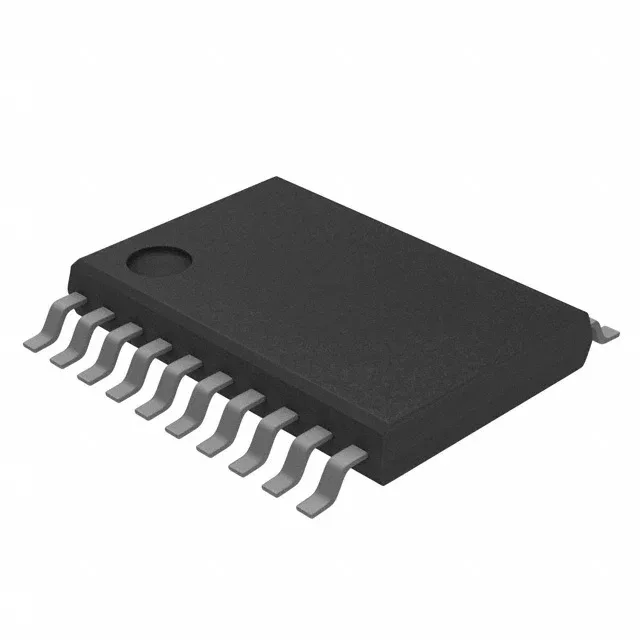
What this 74HCT inverting buffer does
It accepts standard TTL input levels while operating from a 5V supply rail, making it a direct drop-in for systems that need to drive a shared bus with inverted logic and the ability to disconnect the outputs (high-impedance state) when another device takes control of the line. Each of the two elements handles four bits, so the part can buffer eight signals total. The 3-state output control lets you tie multiple buffers onto the same data bus without contention — useful in memory-mapped I/O or multiplexed address/data schemes. The 6 mA source and sink capability (per output) is typical for HCT logic; it drives CMOS inputs cleanly and can handle a few low-power loads, but if you need to drive a long backplane trace or a high-capacitance line, plan on a bus transceiver with higher drive.
Layout needs careful decoupling — a 0.1 µF ceramic right at the supply pin, ground plane underneath, and short traces to the bus lines to keep signal integrity clean at the rated speeds.