Texas Instruments CD74HC4067SM96G4 — Analog & Data Acquisition

CD74HC4067SM96G4 16:1 Analog Mux, 89 MHz, -55 to 125°C

MPNCD74HC4067SM96G4
End of Life

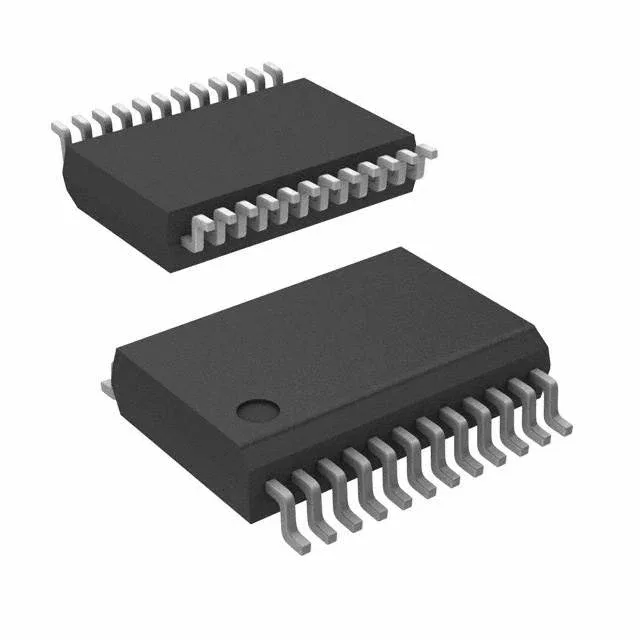
Texas Instruments CD74HC4067SM96G4, 16:1 analog multiplexer/demultiplexer, 89 MHz -3dB bandwidth, 160 Ohm on-resistance, 2V to 6V supply, -55°C to 125°C, 24-SSOP package.

$0.6800Ref. price · indicative, final on quote
Independent supplier — new & surplus stockAuthenticity-screened · ESD-safe packingListing updated Jul 2026

Specifications

CD74HC4067SM96G4 specifications
ParameterValue
MountingSurface Mount
Voltage - supply, single (V+)2V ~ 6V
Current - leakage (IS(off))800nA
Operating temperature-55°C ~ 125°C (TA)
-3db bandwidth89MHz
PackageTape & Reel (TR) Cut Tape (CT)
Case24-SSOP (0.209\", 5.30mm Width)
Number of circuits1
On-State resistance160Ohm
Switch time (Ton, toff)51ns, 49ns
Multiplexer (Demultiplexer circuit)16:1
Channel-to-Channel matching (ΔRon)8.5Ohm
Channel capacitance (CS(off), CD(off))5pF, 50pF

Product details

16 analog channels in a 24-pin SSOP

The 24-SSOP package (5.30 mm body width, 0.209-inch pitch) keeps the board footprint tight for multi-channel data acquisition, sensor front-ends, or test-equipment routing matrices.

The -3 dB bandwidth of 89 MHz means this mux passes analog signals up to the low-VHF range with less than 3 dB of loss — adequate for video baseband, high-speed ADC front-ends, or RF envelope switching. On-state resistance is 160 ohms maximum, with channel-to-channel matching of 8.5 ohms. That matching figure matters for gain- or offset-sensitive multiplexed channels: the 8.5-ohm delta keeps the insertion loss variation between channels under 0.2 dB into a typical 10-kohm load. Switching times are 51 ns (turn-on) and 49 ns (turn-off) maximum, fast enough for 10 MHz clocked multiplexing with adequate settling margin. Off-channel leakage is 800 nA maximum, which limits the off-isolation floor — fine for 12-bit systems but worth derating for 16-bit precision at elevated temperature.

The HC logic family draws low quiescent current across the range — a practical advantage in thermally constrained or battery-backed designs.

Frequently asked questions

Where can I buy CD74HC4067SM96G4 and get a price?

Submit a request with your target quantity and we will confirm availability and current pricing — no stock-holding claim, no automated price, just a direct quote for your BOM line.

What is the difference between CD74HC4067 and CD4051?

The CD74HC4067 is a 16:1 multiplexer (single common I/O, sixteen channels), while the CD4051 is an 8:1 multiplexer with three binary-select lines and an inhibit pin. The HC4067 offers wider supply range (2 V to 6 V vs 3 V to 15 V for the CD4051) and faster switching (51 ns vs 400 ns typical). The CD4051 includes an on-chip level shifter for ±5 V analog swings; the HC4067 is single-supply only. They are not pin-compatible — the HC4067 uses a 24-pin SSOP, the CD4051 comes in 16-pin DIP/SOIC.