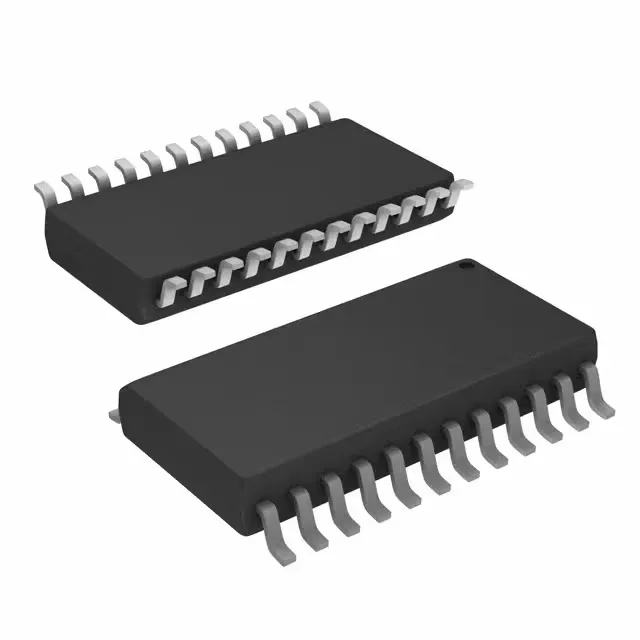
Texas Instruments CD74HC4067M96E4 — Analog & Data Acquisition

CD74HC4067M96E4 16:1 Analog Mux/Demux, 160 Ohm, 24-SOIC

MPNCD74HC4067M96E4
End of Life

Texas Instruments 74HC4067 series 16:1 analog multiplexer/demultiplexer, 160 Ohm max on-resistance, 89 MHz bandwidth, 2V to 6V supply, -55 to 125°C, 24-SOIC surface mount package, Tape & Reel.

$5.9500Ref. price · indicative, final on quote
Independent supplier — new & surplus stockAuthenticity-screened · ESD-safe packingListing updated Jul 2026

Specifications

CD74HC4067M96E4 specifications
ParameterValue
MountingSurface Mount
Voltage - supply, single (V+)2V ~ 6V
Current - leakage (IS(off))800nA
Operating temperature-55°C~125°C(TA)
-3db bandwidth89MHz
PackageTape & Reel (TR)
Case24-SOIC (0.295\", 7.50mm Width)
Number of circuits1
On-State resistance160Ohm
Switch time (Ton, toff)51ns, 49ns
Multiplexer (Demultiplexer circuit)16:1
Channel capacitance (CS(off), CD(off))5pF, 50pF
Channel-to-Channel matching (ΔRon)8.5Ohm

Product details

16:1 analog mux — one channel selected at a time

The CD74HC4067M96E4: It routes one of sixteen inputs to a common output, or the reverse as a demultiplexer, controlled by a 4-bit digital address. The 160 Ohm max on-state resistance sets the series impedance for the selected channel — budget the voltage drop across that resistance at your signal current and load impedance.

Bandwidth and switching speed

89 MHz -3 dB bandwidth means this mux passes analog signals well into the HF range without significant roll-off — think video, RF envelope, or high-speed data acquisition front-ends. The 51 ns turn-on and 49 ns turn-off times (max) keep channel switching fast enough for most scan rates and sample-and-hold circuits.

Listed as Active product status.

Frequently asked questions

Can CD74HC4067 be used as a demultiplexer?

Yes — the 16:1 circuit works bidirectionally. With the common pin as the input and the sixteen channel pins as outputs, it functions as a 1-to-16 demultiplexer. The same address lines select which output receives the signal.