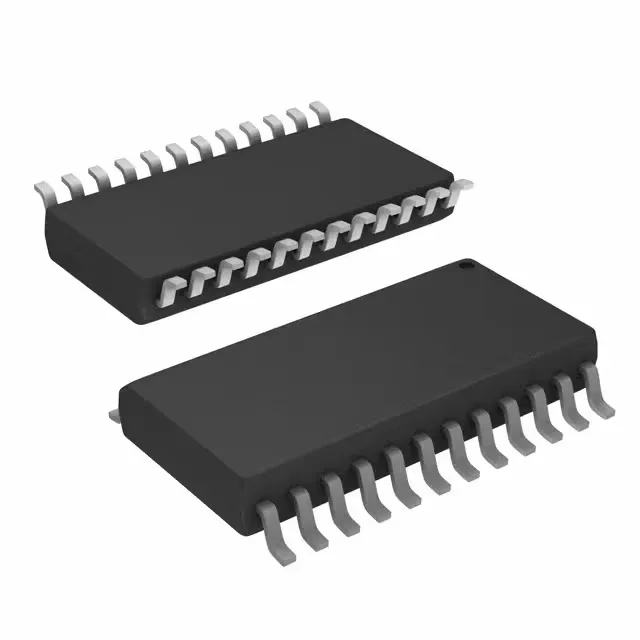
The CD74HC4067M96 is a single 16:1 analog multiplexer/demultiplexer from TI's 74HC family. It replaces sixteen individual SPST switches or a handful of smaller muxes with one IC, which is the kind of board-space win that makes a field kit lighter and a BOM shorter. Rated for the full -55 to 125 °C temperature range, this part is at home in an engine bay, a satellite transceiver, or a downhole tool — not just a climate-controlled lab bench.
160-ohm on-resistance — the voltage-drop budget
Maximum on-resistance is 160 ohms across the full supply and temperature range. Use that for worst-case voltage drop calculation. Channel-to-channel matching is 8.5 ohms max, so the gain error across channels stays tight — useful when you are scanning multiple sensors and do not want a different offset on each channel. Off-leakage current is 800 nA max. That is low enough to not load your signal source, but if you are multiplexing high-impedance outputs (mega-ohm range), the leakage will develop an offset voltage you need to budget for.
89 MHz bandwidth — analog and digital signals
The -3 dB bandwidth is 89 MHz, which means this mux passes composite video, 10-100 MHz clock signals, and fast analog waveforms without rolling off the edges. For a digital bus or an analog sensor front-end, that bandwidth is more than adequate. Switching times are 51 ns on and 49 ns off, so you can scan all 16 channels at several megahertz without missing a sample. The channel capacitance (5 pF off, 50 pF off on the drain side) will limit your settling time at the ADC input — factor that into your acquisition window.